
Libya resumes efforts to take advantage of its solar potential
Libya’s Misurata Free Zone is resorting to solar to increase its energy independence, with support being provided by U.S.-based energy consultancy, iQ Power.
Kazahkstan tenders 290 MW of solar
Overall, new auctions launched by the Kazakh government will allocate 1 GW of renewable energy generation capacity, including 620 MW of wind power plants.
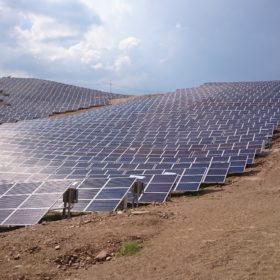
Turkey registers 522 MW of new unlicensed PV capacity in first two months of 2018
Overall, the country’s registered unlicensed solar capacity has reached 3.9 GW (AC), according to new data released by local grid operator, TEIAŞ. There are, however, differing views on how much has actually been completed and is operational.
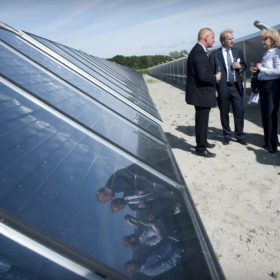
Belgium: Flemish government pushes for more community solar
Through the platform Zonnegids, the Flemish Ministry of Energy seeks to connect developers of commercial and industrial PV projects with private citizens that want to invest in solar, but have no surface available.
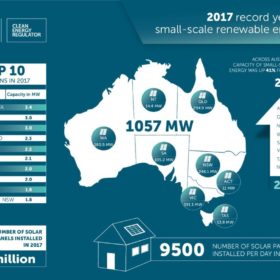
Australia: record 1.07 GW small-scale solar installed in 2017
It’s official: 2017 was a record year for rooftop PV in Australia. The Clean Energy Regulator announced today that over 1070 MW of small-scale solar was installed by Australian homeowners and businesses in 2017 – representing 41% growth over 2016.
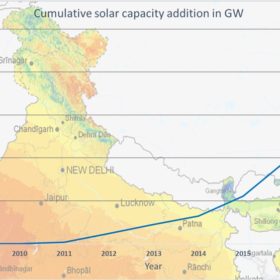
Recent trade conflicts to reduce India’s total solar installed capacity to 6 GW in 2018
According to Bridge to India’s ‘India Solar Compass’ report, new capacity additions in 2017 totaled 9,255 MW, up 94% on 2016. However, Q4 2017 was slow in terms of project commissioning with just 1,503 MW of utility-scale projects commissioned. Moreover, execution costs have increased by around 18% in just six months.
2017 Polish residential PV grew by 81.3 MW
The residential segment saw an increase of 26% in new installations last year, with net metering continuing to drive the market.
Japan: Kumamoto Electric pushes PV-powered cryptocurrency unit as potential curtailment solution
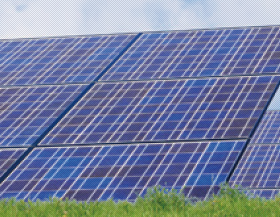
Kumamoto Electric Power, a Japanese power producer and retailer, has launched a new cryptocurrency-mining subsidiary that will primarily draw electricity from solar PV arrays.

Vietnam files complaint with WTO over US solar tariffs
The Vietnamese authorities have submitted a complaint to the World Trade Organization (WTO) to request formal consultations with Washington over its recently announced 30% tariff on crystalline silicon PV imports.
Netherlands’ solar installs top 2.7 GW
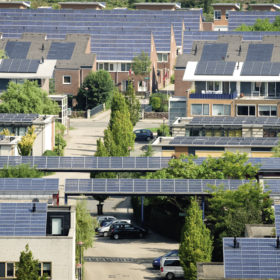
Around 700 MW of installed PV was connected to the grid in the Netherlands in 2017, according to provisional numbers provided by the Dutch Central Bureau of Statistics (CBS). Solar was also able to increase its share in the country’s power production from 1.30% in 2016, to 1.75% last year.
