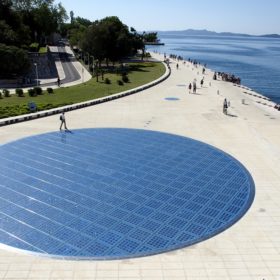
Balkan update: Croatia, Bosnia and Herzegovina ready for their biggest PV projects, Macedonia inaugurates first module fab
With Republika Srpska, one of the two entities of Bosnia and Herzegovina, announcing a tender to build a 65 MW solar PV plant; Croatia planning a 6.5 MW solar PV installation, to be built on the Island of Cres; and Macedonia welcoming its first solar panel manufacturing plant, capable of producing 20 MW annually – it has been a busy period for the small solar markets in the Balkans.
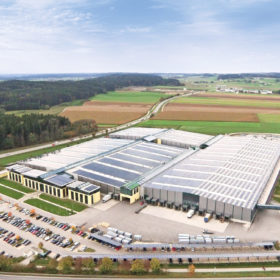
Schletter acquisition finalized
The new shareholder obtained business operations, and shares in the German solar PV company. This transition finalizes Schletter’s financial recovery.

The China effect: Decreasing PV utilization rates, serious oversupply and future strategies
Independent energy analyst, Corinne Lin discusses the fallout of China’s recent solar PV policy decision, including decreasing utilization rates and serious oversupply; and a focus on equipment upgrades, particularly for PERC, SE, half cut and bifiacial technologies. The industry will bounce back in 2019, she concludes.
TrendForce: Price war may begin due to overcapacity
The Taiwanese analysts expect that overcapacity will force some solar players to abandon their business or file for bankruptcy. IHS Markit also sees further price declines and consolidation in the third quarter, although it does forecast signs of a speedy recovery.

SolarEdge’s enters UPS market, $11.5 million Gamatronic acquisition closed
The Israel-headquartered power electronics supplier continues to diversify its business base as it closes its acquisition of UPS provider Gamatronic. Uninterruptible power supply is a multi-billion-dollar market expected to grow in the coming years.
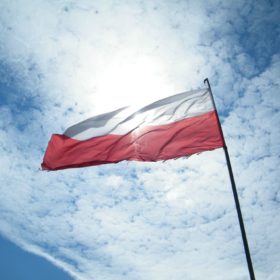
Solar to reach 1.2 GW in Poland by the end of 2020
With around 300 MW of installed PV power at the end of May, Poland still needs volume to become a major European PV market. More capacity is expected to come online over the next years, however, as a result of the auction mechanism for renewables. Around 360 MW was allocated by the two auctions held by the Polish government, although only 27 MW of this is currently online.

ABB finalizes $2.6bn GE Industrial Solutions acquisition, deploys VPP in Italy
The company reports that its IoT ABB Ability platform connects to existing GE Industrial Solutions’ installations. The company will supply its products to GE, with the GE brand name being retained. Access to the North-American market was named as one of the primary motivators for the acquisition. At the same time, the company inked a deal to support Be Power in the Italian market for dispatching services with its ABB Ability solution.

Spain: Enel builds 84.9 MW solar park, Barcelona launches own energy company
Spain’s Enel unit Endesa plans to invest €59 million in the construction of a 84.9 MW solar park in the town of Totana, in the southern region of Murcia. In other news, Catalonia is also seeking independence through energy. In this vein, Barcelona Energy, a public metropolitan electricity operator that will supply renewable electricity to the City Council and other municipal companies, as well as street lighting, began operations yesterday.
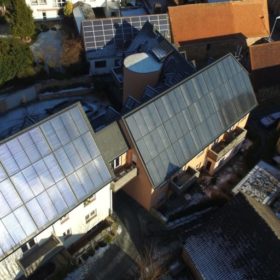
Germany registers almost 200 MW of solar in May
In particular, the rooftop PV segment continues to drive the market in Germany. For ground-mounted systems, newly registered PV capacity for May was approximately 37.5 MW.
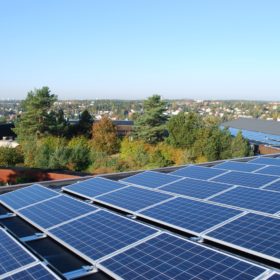
Sweden increases 2018 solar budget, again
The annual budget for solar rebates has been raised from SEK 390 million to SEK 915 million (US$102.5 million). Additional funds are intended to spur more growth and reduce waiting period for applicants.
