
Venezuela plans its first utility scale PV projects
Although details are vague, the Vice Ministry of Alternative Energies is reportedly developing the country’s first medium sized projects to be connected to the national grid. It is also planning to implement distributed generation projects ranging in size from 1.5 MW to 3 MW in the crisis-torn nation.
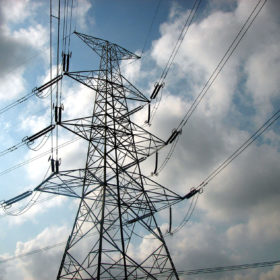
China offers insight into transition to subsidy-free solar
The emphasis on grid-parity PV has been highlighted in a consultation document that has emerged after several weeks of haggling in Beijing. Chinese analyst AECEA says the success of any subsidy-free effort would hinge on the ability of power companies to transmit and guarantee consumption of power generated by new projects.

Hanergy plans to roll out industrial park development outside China
The Chinese thin film giant has transformed itself into a solar manufacturing equipment supplier and is set to expand a strategy which sees affiliates help fund industrial parks which then generate orders for its thin film production lines.
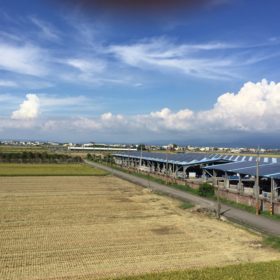
Taiwan becomes a GW solar market
TrendForce says the country deployed more than 1 GW of new PV for the first time last year, and predicts this year may see as much as 1.5 GW of new solar capacity. The nation’s cumulative capacity reached 2,618 MW at the end of last year, according to the International Renewable Energy Agency.

Hungary deployed more than 400 MW of solar in 2018
The nation had a record year for solar energy development. Most of last year’s new additions – 320 MW – came through a FIT scheme but a further 90 MW was represented by net metered installations. Hungary’s cumulative installed PV capacity reached around 700 MW in 2018.

Croatian utility announces 350 MW solar expansion plan
After issuing its first call for renewable energy projects in February, power company HEP has now announced it will invest $23 million annually in solar until 2023, to add new capacity additions of 20 MW per year. The 350 MW plan is expected to be complete in 2030.
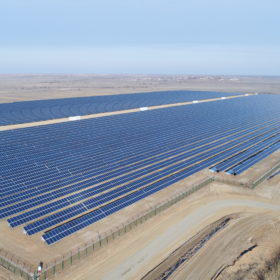
Global solar may reach 8,500 GW by 2050 – IRENA
Solar and wind could account for three-fifths of electricity generation in 2050, with more than 14.5 TW of installed power. Lumped together, renewables are expected to reach a power generation capacity of around 20 TW.
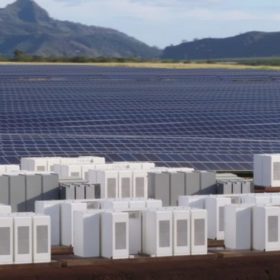
Storage set to come of age in the next five years
The transition for utility scale storage from offering short duration, high value grid services to the world of long duration energy peaking could spell the end of fossil fuel backup generation within five years.

India investigates claim of dumped coated steel products from China, Korea and Vietnam
In the latest tariff spat to afflict the solar world, India’s Directorate General of Trade Remedies will investigate a claim steel products coated with aluminum and zinc are being dumped by Far Eastern manufacturers.
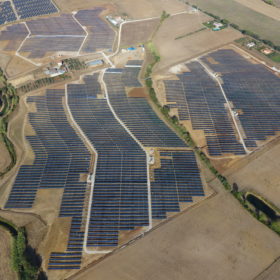
PV projects above 100 MW capacity proliferate in central Italy
Tuscia, in the Lazio region, is the focus of plans for several big solar parks including a 150 MW project approved by the regional government, two schemes exceeding 100 MW and six more projects ranging in size from 17 to 70 MW. Some 700 MW of solar is under development in the municipalities of Montalto di Castro and Tuscania alone.
