
New EU battery rules support a sustainable energy industry
On Dec. 10, European Internal Market and Environment Commissioners Thierry Breton and Virginijus Sinkevičius, in conjunction with Vice President Maroš Šefčovič, announced a keenly anticipated piece of legislation: the commission’s proposal for modernized EU battery rules. Pia Alina Lange – head of communications for Recharge, the European battery industry association – says that while there are potential pitfalls with the new regulation, it could pave the way to sustainable industry development.
Residential storage growth continues despite Covid-19 headwinds
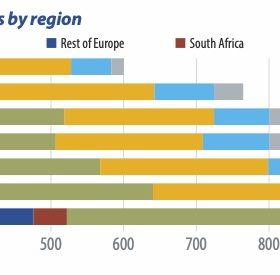
The global residential energy storage market continued to grow in 2020, writes IHS Markit Analyst Michael Longson. Many suppliers were looking to build upon a strong first quarter when Covid-19 hit in March 2020 and slowed the market significantly. However, as a result of several funding packages being introduced and the gradual easing of local restrictions, shipments continued to grow throughout the second and third quarters, enabling strong year-on-year growth for the sector in 2020.
Renewables targets falling by the wayside, according to African solar survey
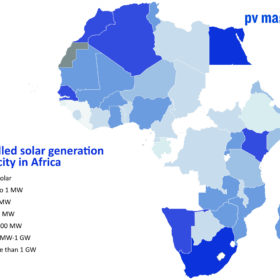
An overview of the state of solar across the continent by trade body the Africa Solar Industry Association has highlighted a patchy policy landscape where clean power ambitions are often not followed through.
Global PV installations to surpass 150 GW in 2021
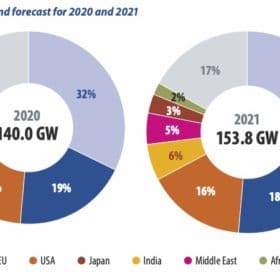
Despite pandemic-induced impacts, the PV market was bigger than expected last year. In particular, an installation rush in Vietnam and China took place in December and pushed global demand upward. PV InfoLink estimates that global module demand in 2020 reached 140 GW. Analyst Mars Chang delves into the numbers.
Renewable energy project financing in Chile analyzed
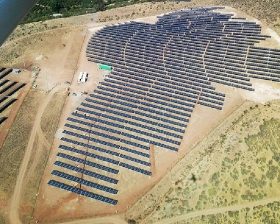
Taking a renewable energy project into its operational phase calls for several workstreams to be synchronized. The one that perhaps jumps out the most is permitting processes: correctly navigating the intricate and time-sensitive steps for licenses and permits. Regardless, each workstream calls for a different set of skills, and because of interlinked chicken-or-egg causality, it is difficult to say which single element is most important in a project’s development. However, there is an unsung element of the financial closing which has as much, if not more, impact on a project’s profitability than the cost of debt does: the underlying terms and conditions.
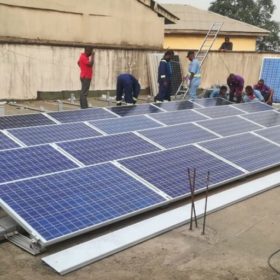
Global actions delivering electricity for rural households through off-grid renewable energy
The Sustainable Development Goal set forth in SDG 7.1 calls for universal access to affordable, reliable, and modern energy services by 2030. It is estimated that currently 789 million people do not have access to electricity in their homes or communities. Rural inhabitants encompass 80% of the total number of people lacking household electricity access. On a global scale, rural inhabitants have been gaining access to electricity at a rapid rate over the past couple decades (IRENA 2020, 23). However, certain regions have seen little improvement in this area. Sub-Saharan Africa (SSA) is the starkest example.
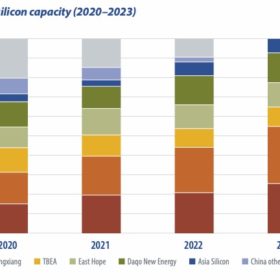
Xinjiang sanctions and the PV supply chain
Due to forced labor concerns, a ban on imports from Xinjiang to the United States appears likely. This could be another blow for polysilicon producers hit by industrial accidents and the threat of floods in the third quarter of 2020. Chinese polysilicon prices have surged more than 50% in a matter of a months. Consequently, wafer prices have skyrocketed, bringing increasing costs to the solar cell and PV module segments. In the face of price hikes, some projects are now postponed until the first half of 2021.

The world won’t wait – Biden needs to catch up
The inauguration of Joe Biden as the 46th President of the United States has brought hope the country will play a central role in the world’s energy transition and combating climate change. However, rather than teaching other countries lessons, the U.S. will need to catch up with the rest of the world, and it needs to do so quickly – the world won’t wait for the U.S.
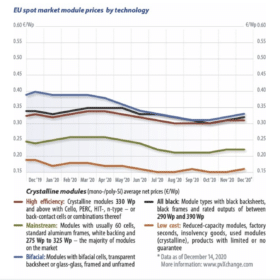
Module Price Index: 2020 – Taking the time to say ‘thanks’…
Alongside all of the problems, 2020 has brought us a few promising solar module manufacturer initiatives and developments. Martin Schachinger of pvXchange.com looks back over the second half of the year and offers a quick look at what could be in store for 2021.

Turkish PV manufacturer report reveals country’s annual production capacity is 5,610 MW/year
In September 2020, Stantec Turkey launched a market assessment report for the Turkish solar PV panel manufacturing sector. The English version of the “Market Report for Turkey’s Photovoltaic Panel Manufacturing” followed in November. The report, based on collected data from local manufacturers, depicts the history of the market since its inception in 2011 and provides unique insights into its development and future potential.
