
New deep learning tech uses electroluminescence images to identify defective PV cells
The novel method uses the YOLOv8 framework, integrating an attention mechanism and a transformer model. It was tested on a dataset of 4,500 electroluminescence images against several other models and its results were up to 17.2% more accurate.
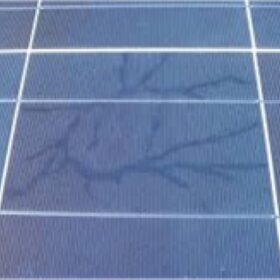
Low-cost machine learning framework for snail trail detection in PV panels
Conceived by French scientists, the novel system uses ensemble learning and does not require anything more than a commercially available optimizer. Before it makes a decision, the method combines K nearest neighbors, support vector machine, and decision tree learning. Accuracy is reportedly up to 89%.

How much shade is enough?
Researchers have covered part of a rooftop solar plant with a different numbers of shading cloth layers to measure their power, current, and voltage. They have been able to identify a point after which the value of system current and maximum power is no longer sensitive to shading heaviness.
PV module cooling tech based on single-channel containing nanofluids
Scientists in Mexico have conceived a new solar module cooling tech that can reportedly improve PV power generation by up to 2%. The system uses nanofluids embedded in an aluminum single-channel attached to the back of the panel.
Researchers use artificial neural networks to optimize PV tilt angles
Scientists have tested several machine-learning algorithms to predict the optimal tilt angle (OTA) of solar projects in 37 Indian cities, leading to improvements of up to 90%.

PV module fault detection tech based on deep learning of electroluminescence
The novel technique is based on the VarifocalNet deep-learning object detection framework, which was reportedly tweaked to achieve quicker and more accurate results. Compared to other such methods, the new approach was found to be the most accurate and third quickest.
Scientists classify weather types based on extreme photovoltaic output events
Scientists used a year’s worth of data from East China to analyze what weather conditions affect abnormal, high, and low PV output days. They also constructed a simple extreme output prediction model and examined the atmospheric circulation anomalies corresponding to extreme output events.
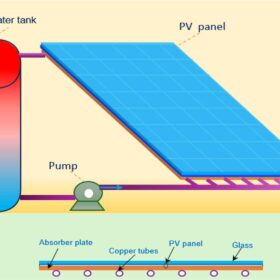
Hydronic closed-loop cooling system for photovoltaic modules
An international research team has developed a closed-loop PV cooling system that can reportedly offer 24-hour continuous operation. The system is claimed to be particularly suitable for hot and arid regions and to improve the lifespan of solar panels by up to 8.2%.
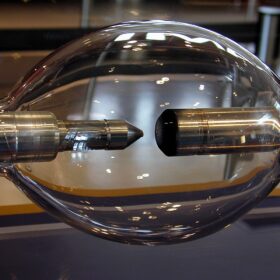
New deterioration diagnosis tech for individual modules in PV panel strings
Conceived by scientists in Japan, the system consists of a a xenon flash lighting system and a detector capacitor. It can reportedly examine solar modules and find the degraded ones without disconnecting the string’s electrical wiring.
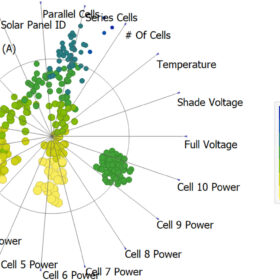
k-Nearest Neighbors algorithm for PV power forecasting
Scientists in Iraq used a k-Nearest Neighbors algorithm to evaluate the operational status of PV modules under various conditions, including partial shading, open circuit, and short circuit scenarios. They found that the overall performance of the model in predicting power output was “notably accurate.”
