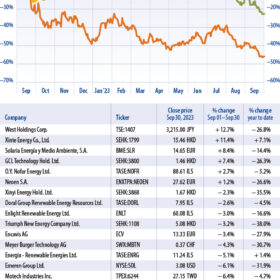
Drags on demand for US residential
The Invesco Solar exchange traded fund (ETF) TAN significantly underperformed relative to the S&P 500 and the Dow Jones Industrial Average (DJIA) stock indexes in September. Jesse Pichel, of Roth Capital Partners, puts this down to oversupply in the United States residential sector.
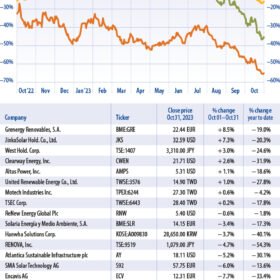
Lackluster performance for US solar stocks
The Invesco Solar ETF (exchange-traded fund) TAN continued on its negative trajectory in October 2023, significantly under-performing relative to the S&P 500 and Dow Jones Industrial Average (DJIA). Jesse Pichel, of Roth Capital Partners, explores some of the latest developments in the US market.
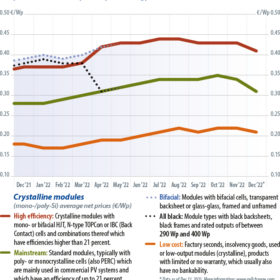
A new year in PV
It looked as though 2022 might end on a quiet note, as supply chains and component prices stabilize, but December painted a very different picture. In PV modules, at least, there has been a lot of movement, says Martin Schachinger, of pvXchange. In some cases, discounts on individual products have been very significant – up to 9% in November 2022. Prices for new, grade-A solar modules have dropped nearly to the level they were a year ago. Is this the beginning of a long-term trend?
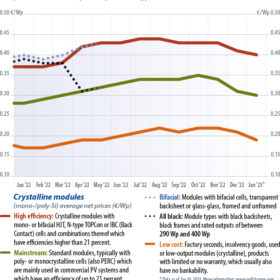
What PV installers expect in 2023
Solar module prices continued to fall in January, and there is no end in sight. The main drivers impacting prices are lower shipping rates from China and the further recovery of the euro-US dollar exchange rate. Martin Schachinger of pvXchange expects other effects, such as slowly falling energy costs or polysilicon and wafer prices, which are in freefall, to further strengthen the trend in the coming months.
State of the (European) union
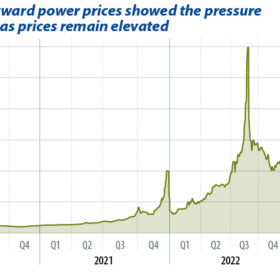
Gerard Reid, co-founder of corporate finance advisory Alexa Capital, considers whether the EU is up to the task of dealing with the twin threats of the energy crisis and the pull of a revitalized US clean power industry.
Knotty string inverter supply
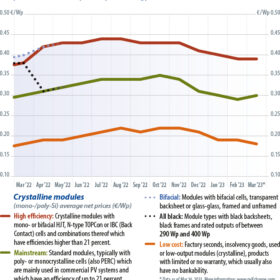
With products thin on the ground, all manner of explanations have been offered up for the latest solar components shortage, says pvXchange’s Martin Schachinger.
From subsidy to energy trading
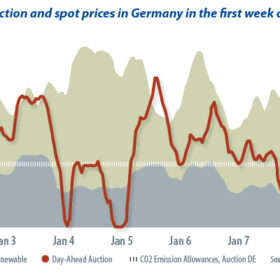
As asset managers become the renewables utilities of the future – given the remarkable advances that solar has made over the past decade – they will have to ensure clean energy generation while working with energy users to stagger demand, says Gerard Reid.
Uneasy price declines
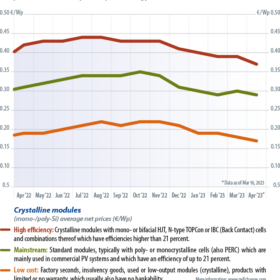
Module prices in all technology classes have fallen since March. This was sudden but not unexpected, writes Martin Schachinger, director of pvXchange, a solar trading platform. Broad price corrections have been necessary to reflect market dynamics.
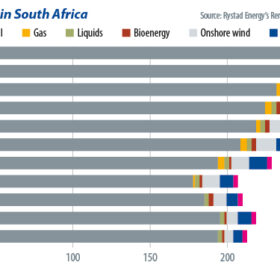
South African decarbonization falls short
Renewable energy will account for just 20% of South Africa’s power mix by the end of this decade, writes Rystad Energy’s Nivedh Das Thaikoottathil. South Africa had targeted lifting the share of renewable energy in its power generation mix from 11%, currently, to 41% by 2030 by increasing onshore wind and solar capacity, both of which have shown significant growth in recent years.
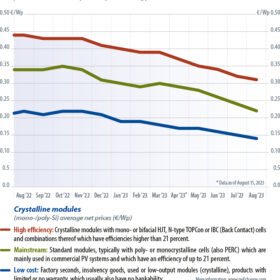
Has PV demand already peaked?
Solar module prices have fallen significantly again, with no end in sight. Prices dipped by 3% to 8% on a monthly basis in July, depending on efficiency and quality. Year on year, prices have fallen an average of 35%. The last time such a sharp decline was seen was in 2018, says pvXchange’s Martin Schachinger.
