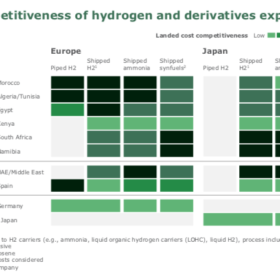
The Hydrogen Stream: Africa could become key green hydrogen market by 2050, says Masdar
Masdar says Africa’s annual hydrogen exports could hit 40 million tons by 2050, while Israeli researchers have published a new study on the discharge characteristics of oxidized intermediates formed under water photo-oxidation conditions.
Indonesia may add 66 GW of solar by 2030, says IRENA
The International Renewable Energy Agency (IRENA) says that solar could become the backbone of Indonesia’s energy system by 2030. However, the nation’s own expectations are still far off from IRENA’s scenarios.
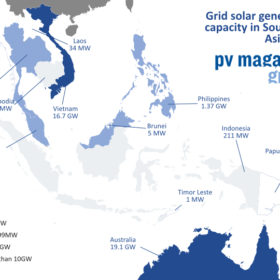
Weekend read: Southeast Asian interconnection
While near neighbors, the electricity generation of the countries of Southeast Asia couldn’t be further apart. Indonesia burns locally mined coal; Malaysia has reserves of oil and gas; and populous Singapore, Vietnam, and the Philippines depend on fossil fuel imports. They could all benefit from increased solar electricity but higher grid capacities and interconnection are key for an opportunity to unlock the power of the sun.
In Asean nations it’s all about the solar
Indonesia will have to get to work installing more than 24 GW of solar this year – and every year – if the region is to achieve the 2.1 TW to 2.4 TW of photovoltaics Irena has estimated it will require to achieve a net zero carbon energy system by 2050.
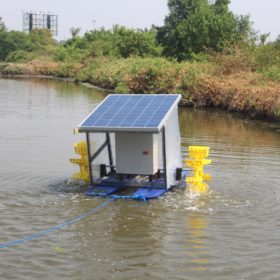
PV-driven aerator for shrimp aquaculture
The aerator consists of a 200 W solar panel, an aerator frame, an eight-leaf windmill for paddling water and restoring oxygen levels, a DC motor working as a driving wheel, a buoy as a component lifter, and a box panel as a protective tool that uses the electricity network.
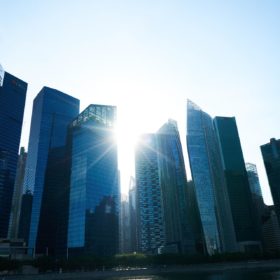
Singapore regulator issues fresh appeal for clean power
The Energy Market Authority has already attracted proposals for 1.2 GW of renewable electricity, to be generated in four southeast Asian nations, and wants to raise that figure to 4 GW by 2035.
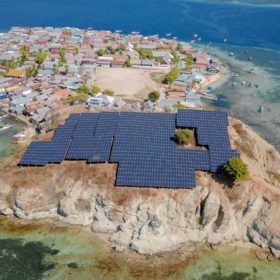
Solar-plus-storage for islands
Indonesian remote islands are increasingly resorting to solar-plus-storage to cover most of their electricity demand. According to new research from LUT University, combining PV with batteries may help islands to cover around 60% of demand with renewable energy.
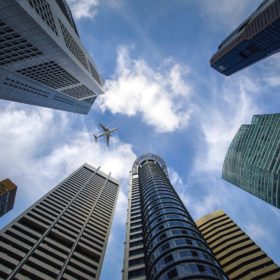
Indonesia’s Riau Islands set for more big solar and storage
Developers are moving fast to meet Singapore’s clean energy needs by establishing overseas solar-plus-storage plants, with a strong focus on facilities in neighboring Indonesia.
Quantum Power Asia, ib vogt propose 3.5 GW solar-storage project in Indonesia
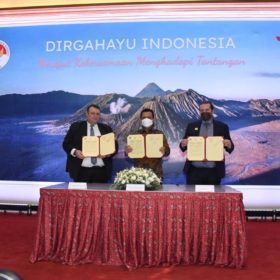
Quantum Power Asia and ib vogt have set up a new partnership to build a 3.5 GW solar-plus-storage facility in Riau, Indonesia. The developers say the proposed $5 billion project could export solar electricity to Singapore by 2032.
EU adds anti-subsidy duty to existing trade measures on Indian and Indonesian steel
The European Commission has alleged China offered cut-price finance to Indonesia, via Beijing’s Belt and Road drive, so Jakarta could develop domestic demand for stainless steel raw material nickel ore.
