
The Hydrogen Stream: 200 MW electrolyzer in the Netherlands, Russian-French partnership for blue hydrogen
French energy company TotalEnergies and Russia’s second-largest natural gas producer, Novatek, are exploring new opportunities in the development of decarbonized blue hydrogen and ammonia. Anglo-Dutch energy major Royal Dutch Shell has awarded the Australian engineering company Worley a services contract to support the development of a new 200 MW electrolysis-based hydrogen plant in Rotterdam, Netherlands.
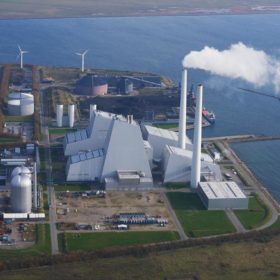
The Hydrogen Stream: 30 GW power-to-X project in Mauritania, 250 MW of wind for power-to-X in Denmark
The government of Mauritania and renewable energy developer CWP Global have signed a memorandum of understanding to develop a 30 GW power-to-X project. Danish power company Ørsted, and Copenhagen’s utility, Hofor, entered into an agreement that will secure green power in the framework of the wider, 1.3 GW, Green Fuels for Denmark project.
The Hydrogen Stream: US port wants to produce 9,000 MT with 260 MW/840 MWh of solar-plus-storage
Aurora Energy Research reports that the size of electrolyzers is increasing. Furthermore, Chile moves forward with its first green hydrogen project and German car manufacturer BMW said it would unveil a hydrogen fuel cell SUV in 2022.
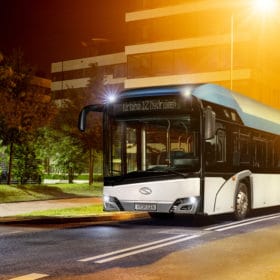
The Hydrogen Stream: Massive hydrogen/green ammonia project in Chile, hydrogen atlas for Germany
Furthermore, Canadian integrated energy company Suncor and Canadian holding company ATCO are looking into a potential “world scale clean hydrogen project” in Alberta, and Japanese energy company Eneos and Japanese multinational automotive manufacturer Toyota Motor, are exploring hydrogen applications at Woven City, a prototype city in Japan.
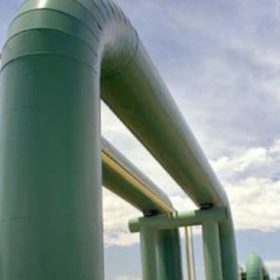
‘Hydrogen as a universal climate solution might be a bit of false promise’
Hydrogen and hydrogen-based fuels will not be able to move forward fast enough to replace fossil fuels and tackle climate change, according to a German-Swiss research team that claims direct electrification alternatives are cheaper and easier to implement. The scientists cite too-high prices, short-term scarcity and long-term uncertainty, as the main reasons for their skepticism.
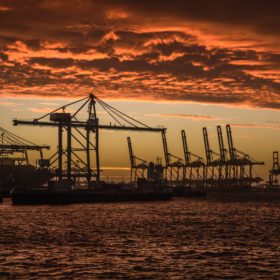
The Hydrogen Stream: More hydrogen for the ports of Rotterdam and Antwerp
Australia and Chile are both granting funds to green hydrogen projects and Denmark is exempting pilot power-to-gas projects from complying with its energy legislation. Furthermore, the Fraunhofer Institute for Applied Polymer Research IAP is working to find solutions for private customers to produce hydrogen.
The Hydrogen Stream: 20 MW electrolyzer in Spain, hydrogen alliance between Russia and Germany
BP, Iberdrola and Enagás will power a 20 MW electrolyzer with 40 MW of solar in Spain. Automotive manufacturers Hyundai, Stellantis, Toyota and BMW sent a letter to European Commission Vice-President Frans Timmermans asking to support the continued expansion of a 700 bar hydrogen refuelling network in Europe.
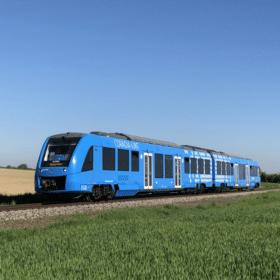
The Hydrogen Stream: Alstom moves forward with world’s first hydrogen train, Chile seeks proposal for hydrogen projects
French train manufacturer Alstom said that its Coradia iLint train is now ready for commercial deployment and the Chilean government launched a call for green hydrogen projects. Furthermore, several developments for fuel cell electric vehicles were announced.
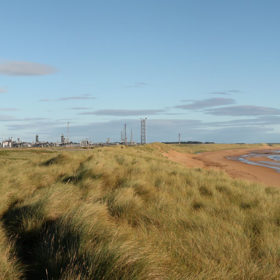
The Hydrogen Stream: 20 MW green hydrogen plant in Finland, two Australian projects move forward
Storegga, Shell and Harbour Energy want to set up a 20 MW blue hydrogen production facility in the U.K. Australia’s Origin Energy wants to build a hydrogen facility at the Port of Townsville, in Queensland. South African company Sasol and Toyota South Africa Motors have announced a partnership to “commence exploration of the development of a green hydrogen mobility ecosystem in South Africa,” starting with zero-emission hydrogen fuel cell (FC) heavy-duty, long-haul trucks.

Green hydrogen and the cable-pipeline dilemma
New research from Singapore has found that gas pipelines for the onshore transport of green hydrogen and the cables for the transport of electricity to produce it at a distant location have similar costs at a 4000 km transmission distance. For longer distances, gas pipelines were found to be cheaper than cables, although the electric lines are said to benefit from scaling up and higher utilization. For both options, however, a currently too high hydrogen LCOE remains the biggest barrier to overcome.
