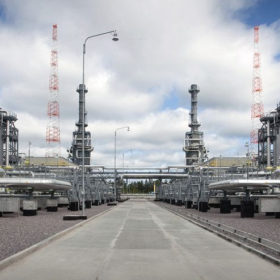
When will the world be fossil free?
Despite the ever-growing number of nations committing to attaining a net-zero economy, there appears little prospect yet of a future free of fossil fuels, as Roger Lewis, an environmental, social, and corporate governance (ESG) expert at Downing LLP explains.
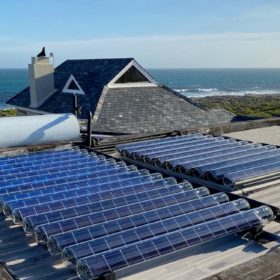
UK must act now to embed solar in energy transition
Tony Danker, head of the Confederation of British Industry, in January warned the UK is at risk of squandering the vast economic opportunities available to nations investing in the energy transition. Christophe Williams, CEO of solar thermal company Naked Energy agrees, and here spells out some of the urgent actions Rishi Sunak’s government must take to place solar thermal – and PV – at the heart of a green revolution.
Solar could have reduced UK gas reliance, says Carbon Brief
Carbon Brief has estimated that the United Kingdom would have needed to import 20 TWh less natural gas this year if successive Conservative governments had not wound down the rewards for generating solar electricity.
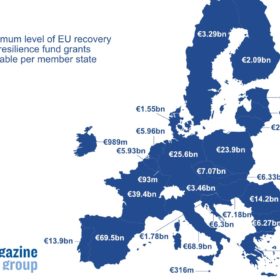
EU to start auctioning green bonds next month
An independent third-party has approved the European Commission’s safeguards to ensure the projects in member states financed by €250 billion of green bonds over the next five years, will have genuine emission reduction credentials.

Importers could pay EU carbon tax from 2026
European commissioner for economy Paolo Gentiloni has outlined how the commission’s planned revision of the energy taxation regime, and introduction of an EU carbon border, could be applied.

Building renovations crucial for heat pump deployment
Building renovations may result in up to 51% space heating demand savings, according to recent research from Germany. Its authors claim that, if buildings are retrofitted and thermal energy storage and individual hybrid heat pumps with back-up gas boilers are applied on a large scale, significant heat cost reduction may be achieved across the whole of Europe.
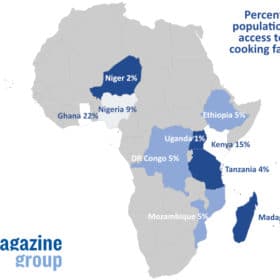
Universal electricity access by 2030 remains a distant dream
Energy efficiency, electrification of heating and transport, and the provision of clean cooking facilities are all going in the wrong direction as the Covid crisis deprived millions in sub-Saharan Africa of electricity use, according to a report by the IEA, IRENA, WHO, World Bank and UN Statistics Division.

Bangladeshi garment makers advance efforts to go green
The government’s clean power department has signed a co-operation agreement with a major clothing industry trade body in a bid to drive net-metered solar rooftop installation.
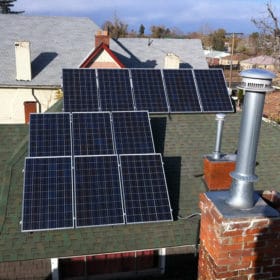
Household solar holds key to climate-neutral Japan
Rooftops will have to supply a third of the 524 GW of solar generation capacity needed by 2045 to reach a zero-carbon economy by mid century, according to an academic paper. The researchers also suggested green hydrogen should not play a central role in the nation’s energy transition.

Solar could play big role in helping renewables displace UK’s planned gas fleet
Each 1.8 GW of new gas generation capacity could be replaced by 1.7 GW of solar as part of a cleaner, 6.3 GW collection of renewables and energy storage facilities–and that alternative already comes in cheaper than the business-as-usual approach, according to the Carbon Tracker thinktank.
