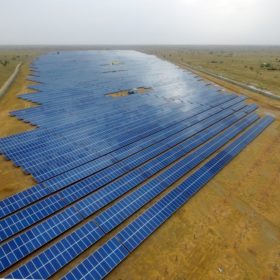
India will auction 80 GW of solar, wind capacity by March 2020
The Indian Government plans to tender 60 GW of solar and 20 GW of wind capacity by March 2020. This would complete the planned auctions for its targets of 100 GW solar and 60 GW wind installations by 2022, leaving two years for project execution, according to an year-end review by the Ministry of New and Renewable Energy (MNRE).
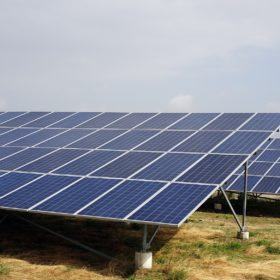
Indian PV procurement leapt to 3 GW in October figures
Developers gave short shrift to warnings about depreciation, protectionism and tax headwinds as tendering and auction figures soared, but shied away from tough price caps set for the Solar Energy Corporation of India’s procurement exercises.
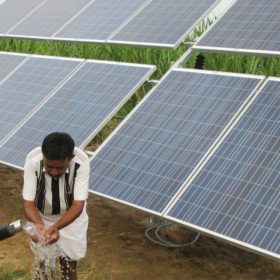
Hitting 76% of its solar ambition would still be some achievement for India
Analysts are weighing into the debate over the Ministry of New and Renewable Energy’s big solar plans, but pointing out even a partial victory would set the foundation for future solar triumphs.

Nearly 8 GW of Indian solar projects receive 6 month extension – MNRE
To ensure their continued viability, nearly 8 GW of solar PV projects have been granted an extension by the Ministry of New and renewable Energy (MNRE).
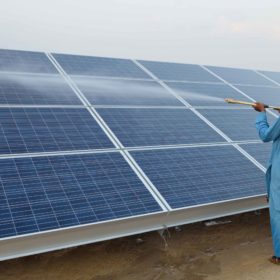
India to introduce cap on solar tariff
In a major development, the Ministry of New & Renewable Energy (MNRE) has directed the Solar Energy Corporation of India (SECI) to fix the upper permissible solar tariff at Rs. 2.50 (US$0.036)/kWh and Rs. 2.68 ($0.038)/kWh for developers using domestic solar cells and modules (without safeguard duties), and imported products (with safeguard duties), respectively.
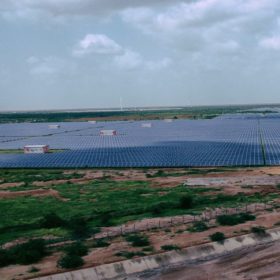
India’s GUVNL unveils 1 GW solar tender
Gujarat Urja Vikas Nigam Limited (GUVNL) has invited expressions of interest (EoIs) to develop 1 GW of grid-connected solar PV projects at the proposed 5 GW Dholera Solar Park. The state of Maharashtra, meanwhile, has issued a generic PV tariff.
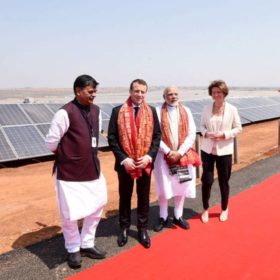
India well on track for 100 GW target, claims minister
The Minister for New and Renewable Energy has waved aside complaints about safeguarding duties by telling India’s upper house the nation’s ambitious four-year solar target is ‘comfortably’ within reach.
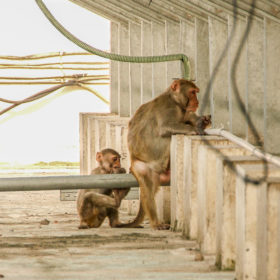
Quality issues in Indian PV projects jeopardizing investments – report
Wildlife vandalism is the least of the worries afflicting PV system owners in India, according to a report which exposes cost-cutting in installation, non-existent warranties, serious safety concerns and improbable performance figures.
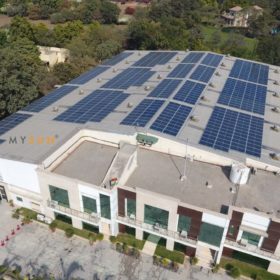
India’s solar rooftop progress still dismal
India’s solar rooftop sector continues to disappoint, with the first quarter of FY 2018-2019 achieving just 155.77 MW against the 1,000 MW EoY target.
India moots world’s largest solar tender – of 100 GW
If implemented, the huge tendering exercise would dwarf anything that has gone before it. Minister explains bidding will also include solar manufacturing and storage elements.
