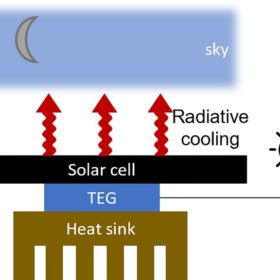
Radiative cooling-based solar cell with 50 mW/m2 of generation at night
Stanford University scientists have developed a solar cell with 24 hours of power generation via an embedded thermoelectric generator, which extracts power from the radiative cooler at night. Extra daytime power from excess heating comes from the cell itself.
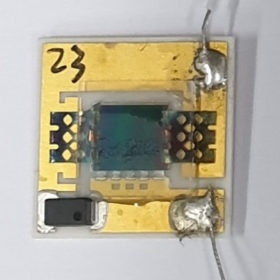
Multi-junction solar cell integrating radiative cooler
The triple-junction solar cell is based on indium gallium phosphide (InGaP), gallium arsenide (GaAs), and Germanium (Ge) and is made with a micro-grating made of glass, consisting of a two-dimensional x-framework structure fixed onto the surface of the solar cell. Its operating temperature was found to be 6 degrees Celsius lower than that of a reference cell without the cooling technique.
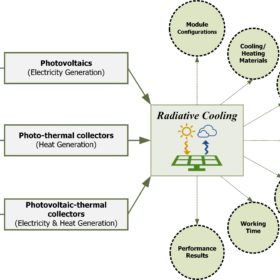
The best radiative cooling tech for PV arrays
Scientists in China have analyzed the radiative cooling techniques used in combination with solar energy systems such as PV arrays, solar thermal collectors, and concentrated PV installations. They identified five major system typologies based on functionality and working time.
Water harvesting tech for PV panel cleaning and cooling
An international research team has proposed to use nighttime radiative cooling to harvest water from PV panels and reuse it for module cleaning during the daytime. According to their findings, the proposed system has, also, a beneficial effect on the modules’ operating temperature.
Radiative cooling for CPV systems
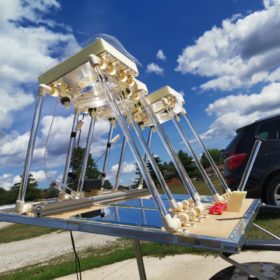
Scientists in the United States have tested soda-lime glass radiative coolers in a CPV system and claim these can reduce the device operating temperature by 5 to 36 degrees Celsius. This may result in an increase in the solar cell’s open-circuit voltage of between 8% and 27%.

The year in solar, part IV: More storage and hydrogen advances as solar just kept getting cheaper
Battery innovations started to come thick and fast this quarter as the hunt for alternatives to lithium-ion intensified and the latest slew of solar tenders indicated the relentless pressure on solar power generation costs was showing no sign of abating.
New material for radiative cooling of solar panels
Spanish researchers have discovered a material said to offer radiative cooling and self-cleaning of devices which undergo critical heating during operation, such as PV panels. The thermal emitter enabled the scientists to lower the daytime temperature of silicon wafers by 14 degrees Celsius.
