
Solar gains ground in Mongolia
A 10 MW solar facility in the Sumber Soum area of Mongolia’s southern Govisümber province has been connected to the grid. The project was financed by the Green Climate Fund and XacBank and takes Mongolia’s installed PV capacity to 35 MW. The pipeline of approved solar schemes has surpassed 700 MW.
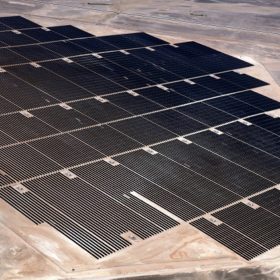
Jordan suspends renewables auctions, new licenses for projects over 1 MW
Auctions and new licenses will be suspended until the Jordanian government has assessed the capabilities of its power network.

France to tender 17.2 GW of solar up to 2025
In France’s new energy strategy, the Macron administration has said how much will be allocated annually in tenders for ground-mount and rooftop PV projects over the next six years. In the best case scenario, France would have 44.5 GW of solar capacity by 2028, with renewables forecast to come in at up to 113 GW.
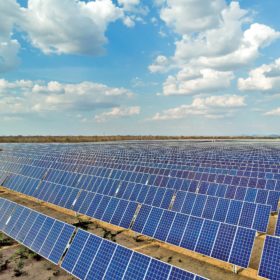
Atlas switches on 67.1 MW solar plant in eastern Brazil
The São Pedro solar complex is in Bom Jesus da Lapa, Bahia state. The plant, awarded a 20-year PPA in Brazil’s 2015 renewable energy auction, was installed with Jinko and Canadian Solar modules. The latter makes modules in São Paulo.
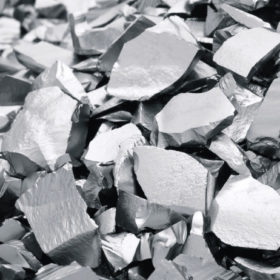
South Korea kicks off polysilicon duty talks with China
South Korean government urged China to lift import measures against its polyisilicon. China imposed duties on polysilicon from South Korea and the United States in July 2013.

Dutch utility Liander expects 6 GW of solar on its turf by 2023
The Netherlands’ largest power provider said that capacity would be six times more than is currently connected to its grid. To accommodate such vertiginous growth, the company is planning to increase redundancy in critical areas with high levels of solar deployment. Parent company Alliander has announced an €844 million plan to improve the power network.
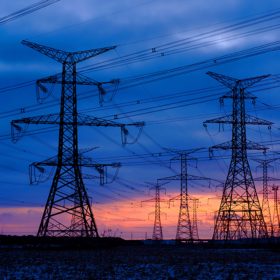
Wallonia’s controversial residential PV fee may only apply to new systems
The energy regulator of Belgium’s French-speaking region has announced the fee for residential PV will come into force next year and may apply only to installations grid-connected after July 1 this year, as proposed by the regional government.

Western Canada’s first solar park secures financing – and will incorporate bifacial panels
The 23 MW Suffield Solar Project is under development by Chinese-Canadian company Canadian Solar in Alberta. The project received CA$15.3 million in funds from the federal government under the Emerging Renewable Power Program.
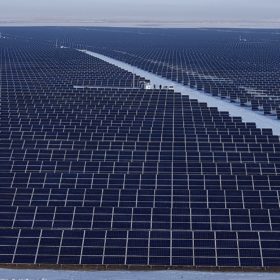
100 MW Saran solar park commissioned in Kazakhstan
The SES Saran solar project is in the Karaganda region. The project was financed by the European Bank for Reconstruction and Development and built by German developer Goldbeck.
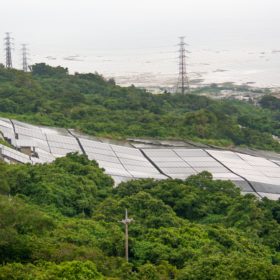
Another disappointing solar auction for Japan as prices stay high
In last month’s exercise, final prices were slightly lower than those seen in previous procurements and the total allocated capacity was 196.6 MW. Through the three tenders held by the Japanese government, around 500 MW of solar was assigned, against a target of 1-1.5 GW. Land availability, grid constraints and high labor costs make projects expensive and force developers to use mountainous regions.
