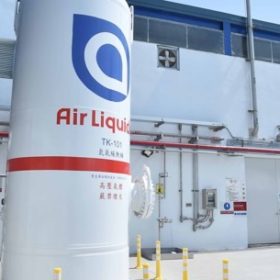
The Hydrogen Stream: Siemens targets $1.50/kg by 2025, BP and Saudi Aramco bet on blue hydrogen
The German company expects to roll out its in-house proton exchange membrane (PEM) electrolysis technology to implement a gigawatt production of electrolyzers. BP partners with UK gas distributor Northern Gas Networks (NGN) to develop blue hydrogen and Saudi Aramco teams up with Hyundai Heavy Industries to do the same. Italy’s Snam wants to build hydrogen projects in the United Arab Emirates.

Adriatic Sea to host 100 MW offshore PV plant
Italy’s Saipem is planning what could be the world’s largest offshore PV plant — a 100 MW facility located off the coast of the Italian northern region of Emilia-Romagna. The project, whose approval process began two years ago, is expected to become operational by the end of 2025.
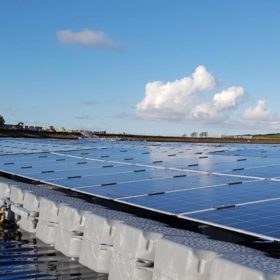
How much floating PV is enough?
Scientists in the UK have had a closer look at the impacts of floating PV systems on the water. They found that their cooling effect on water mitigates blooms of toxic blue-green algae and increased water evaporation, which are both caused by global warming. They also warned, however, that colder water may result in a reduction of the duration of so-called thermal stratification. The right proportion between the surface occupied by the PV array and a water surface’s total area is key for addressing this issue.
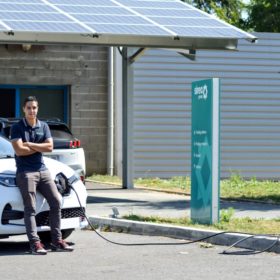
EV recharging station powered by solar, hydrogen
The recharging station was designed by French automation group Sirea. It is powered by a solar carport and a small electrolyzer.
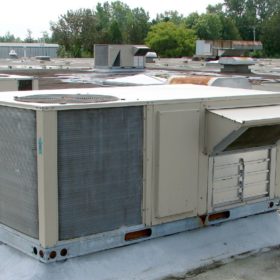
Cooling PV panels with HVAC system exhaust
A French-Lebanese research group has proposed a way to cool down PV modules by using air exhausted from heating, ventilation, and air conditioning (HVAC) systems. They showed that array performance improves when the cooling load rises.

Polyelectrolyte-based inverted perovskite solar cell with 20.29% efficiency
Taiwanese researchers have added bathocuproine (BCP) molecules to three different kinds of solvents used in perovskite cells and have ascertained how this combination increases the carrier mobility and passivates the electron-poor defects. Furthermore, they utilized a polyelectrolyte (P3CT-Na) thin film as hole transporting material instead of commonly-used thin films based on PEDOT:PSS.
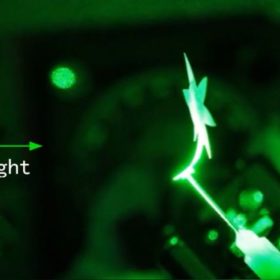
New photonic material for self-aligning solar cells
US scientists have made light-tracking, three-junction tandem PV cells with an active area of 650 × 650 square micrometers. They are based on indium gallium phosphide, gallium arsenide, and indium gallium arsenide antimony nitride and use photonic crystal film for maximum efficiency.
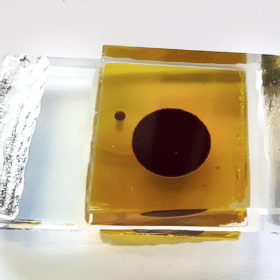
Grätzel solar cell with 13.5% efficiency, high open-circuit voltage
Scientists from Switzerland fabricated a dye-sensitized solar cell with a new tailored organic photo-sensitizer coded MS5 and a copper (II/I) electrolyte. A device solely sensitized with MS5 showed an open-circuit voltage of 1.24 V, which the researchers said is a record value among copper-based Grätzel cells.
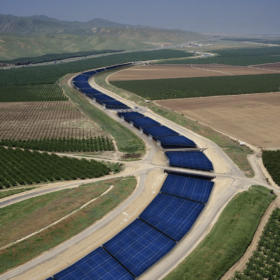
Solar canals already competitive with ground-mounted PV
U.S. researchers have assessed the technical and economic feasibility of solar canals in California and have found that their LCOE is already close to that of ground-mounted solar plants. Three different project configurations were analyzed for eight different sites across the California network of canals.
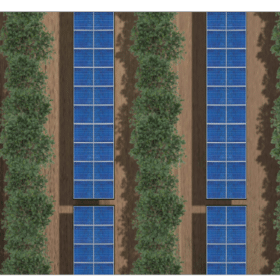
Integrating big solar into olive groves
German energy company Steag wants to build three PV plants totaling 244 MW across several olive groves in the southern Italian region of Apulia. The unsubsidized agrivoltaic projects are expected to sell electricity through power purchase agreements. The distance between the rows of the olive grove and the photovoltaic system has been specifically designed both to avoid shadowing and allow the passage of the automatic machinery necessary for the cultivation of the olive trees.
