
A new perovskite material for solar applications
Barium zirconium sulfide is another chalcogenide perovskite being tested in relation to the development of more efficient solar cells. Researchers at Buffalo University, in New York state, have created a thin-film based on the material they say offers significant light absorption and good charge transport.
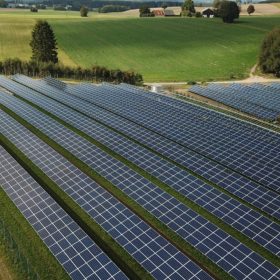
Best-worst method applied to select solar project locations
Scientists at the Beijing Institute of Technology have identified the most suitable areas for solar parks in the Chinese capital using a geographical information system and a new multi-criteria decision-making technique: the ‘best-worst’ method. They claim the approach can help establish technically and economically viable projects.
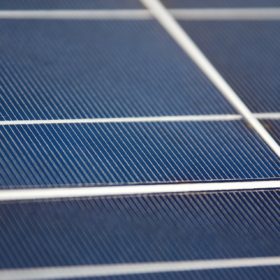
UK researchers confirm correlation between micro-cracks and hot spots in polycrystalline cells
A research team from the University of Huddersfield used electron microscopy to analyze micro-cracks in 4,000 polycrystalline silicon solar cell samples. The results showed power losses may vary from 0.9-42.8%, and increased temperatures due to micro-cracking may favor the formation of permanent hot spots in the cells.

New lithium-sulfur battery unveiled by Aussie scientists
Scientists at Monash University claim to have developed the world’s most efficient lithium-sulfur battery. They say the new device could enable an electric vehicle to drive more than 1,000km on a single charge.
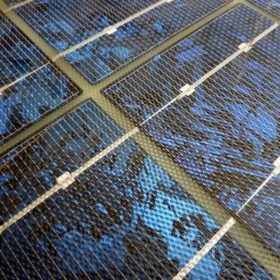
US scientists claim clear-sky irradiance model provides better results for module testing
Researchers at the American Institute of Physics have used the clear-sky irradiance model developed by the National Renewable Energy Laboratory to measure the degradation rates of solar panels at a testing field in Germany over five years. The scientists say the model, when combined with real-world data, offers an efficient tool to evaluate the aging of PV technology.

PV against brain and heart diseases
Researchers in Denmark have developed water-based nanofibers coated with a biological PV substance which can be easily injected into the body. The developers say excitable cells in the heart and brain could be regenerated by being electrically stimulated with the solution.
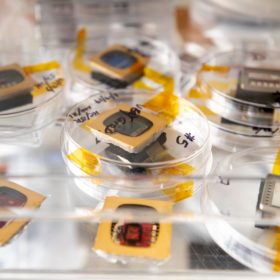
Gauging non-fullerene acceptors for organic PV
U.S. scientists are trying to understand how non-fullerene small-molecule acceptors (NAFs) increase the efficiency of organic PV devices. They claim that methoxy groups embedded in the acceptors could facilitate an efficiency increase of approximately 6%.
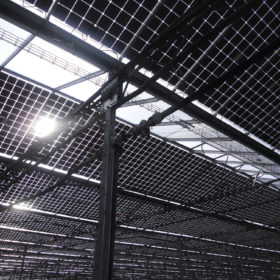
New thermodynamic formula to calculate bifacial gains
An American research team developed the new formula by applying to bifacial cells the Shockley-Queisser triangle, which is used to calculate the maximum theoretical efficiency of a monofacial solar cell using a single p-n junction technology. According to the group’s findings, the triangle can help to clarify the deeper physical principles of the bifacial technology.

Maximizing the potential of PV irrigation in Spain’s ‘Sea of Plastic’
Spanish researchers have developed an analytical model to optimize the operation of PV water pumping systems. They say simultaneously irrigating different parts of a farm could help minimize costs and maximize energy use. The model was tested on an olive farm divided into four zones in the Spanish province of Almería.
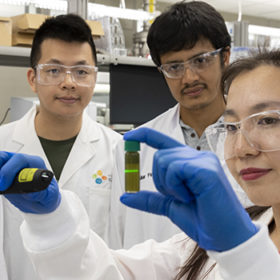
Tungsten disulfide helps organic solar cell reach 17% efficiency
Researchers from Saudi Arabia’s King Abdullah University of Science and Technology claim to have developed a highly performant organic PV cell using tungsten disulfide flakes a few atoms thick. The stability of the device, however, is still to be evaluated.
