The ‘butterfly effect’ of Chinese PV listings
A recent study shows that PV costs have declined faster than any other energy technology over the past two decades. The researcher behind the study said this would not have been possible without the “butterfly effect,” which is based on the idea that a small change in one part of a complex system can have a large impact elsewhere. The researcher also attributed the the rapidly declining cost of PV to Chinese manufacturing and strong US investor support.
New methodology for assessing value of PV in uncertain markets
A new process is described as a tool to assess the value of deferring, relocating or abandoning PV projects under development in uncertain market conditions. Researchers say the model may help investors reconsider projects which could be prematurely rejected based on traditional analytical approaches.

Scientists hit 21.6% perovskite cell efficiency using concentrator PV
An international research group achieved the result on a 9 sq mm, triple-cation based, n-i-p structured perovskite cell using low solar concentration levels. Device instability, however, remains a challenge.
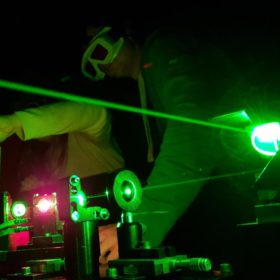
Hot news on harvesting electrons in perovskites
An international research group claims to have developed a new bulk perovskite semiconductor material that can capture the excess energy of hot electrons. The material is said to rapidly absorb as heat energy which would otherwise be wasted. With the harvesting of hot electrons, the maximum theoretical efficiency for hybrid-perovskite solar cells could increase from 33% to 66%.
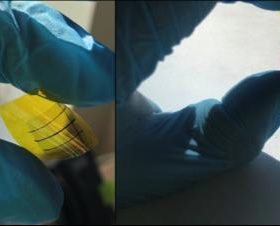
International research group claims 8.8% efficiency for amorphous solar cell
The new cell is based on a p-type transparent conductor made of carbon nanotube fibers. The device is said to offer 16% more efficiency than rival amorphous cells.

Swimming electrons in perovskite nanocrystals
Research from Canada has revealed liquid-like lineshape dynamics in cesium-lead iodide perovskite nanocrystals. The findings could be used to produce cheaper and more efficient perovskite cells, researchers claim.
Straining to fix perovskite cells
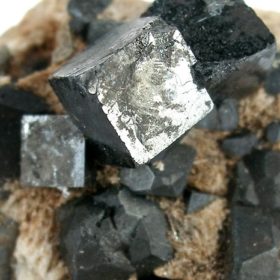
A technique based on optical imaging has been used by an international research team to illuminate strains in lead halide perovskite solar cells without harming them. The scientists claim the approach helped them discover misorientation between microscopic perovskite crystals was the main cause of the strains.
Perovskite solar cells need proteins
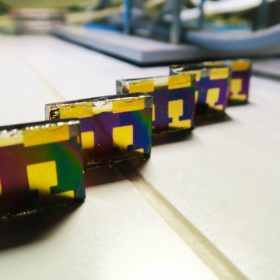
A U.S. research team has used protein bacteriorhodopsin to improve the efficiency of what it called ‘bioperovskite’ solar cells. The scientists used Förster Resonance Energy Transfer to predict the strength of long-range excitonic transport between the perovskite and protein layers.

PV against cancer
Research from the United States has demonstrated how PV technology can be used to kill cancer cells. Although still at an embryonic stage, the findings of the study and initial test results suggest solar power could be an effective tool in relation to light-activated fluorescent dyes for disease diagnosis, image-guided surgery and site-specific tumor treatment.

New antenna for a better photon harvest
An Italian research team has developed a device that it says can easily be integrated into a PV cell, and can boost its efficiency by converting more light particles into a high energy state before they are absorbed by the cell. The scientists claim that their innovation could offer a green‐to‐blue photon upconversion yield as high as 15%.
