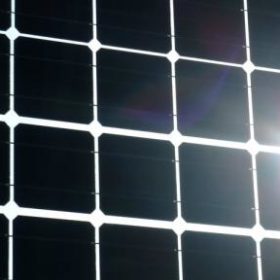
Cambridge scientists say perovskite-based PV cells can achieve maximum 30% efficiency
Researchers from the University of Cambridge and Italy’s Politecnico di Milano have set a time limit for ultrafast perovskite solar cells and have quantified the speeds at which future solar cells would have to operate in order to increase efficiency.
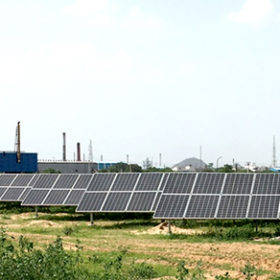
International research team uses algorithm to reduce negative impact of inertia emulation of PV in micro-grids
The computer-based algorithm seeks to make the micro-grid work like a large power grid with inertia, thus improving its stability and reliability.
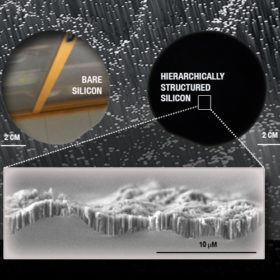
US scientists use nanoscale structures to lower reflectivity in solar cells
The researchers used micro- and nanometer length structures to develop anti-reflective coatings to reduce reflectivity in optical devices such as solar cells, glasses and cameras.

Study finds that storage prices are falling faster than PV and wind technologies
A study from the University of California and TU Munich in Germany shows that long-term R&D spending played a critical role in achieving cost reductions.
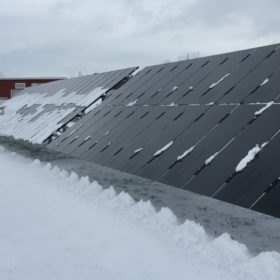
U.S.-Turkish research team uses data science to predict PET back-sheets degradation in solar modules
The scientists have used engineering epidemiology and statistical-data analytics to predict how polyethylene terephthalate films in solar panels deteriorate under multi-factor accelerated weathering exposures.
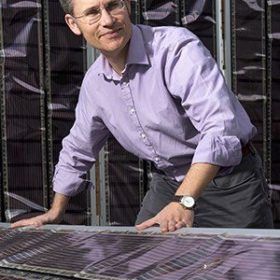
Uni Newcastle team tests “printed solar” panels in Australian first
Just days after Tesla announced it was taking orders – and down-payments – for its much-hyped and quite good looking solar roof, an Australian made printed solar innovation that could rival Elon Musk’s power generating tiles has moved one major step closer to commercialisation.
