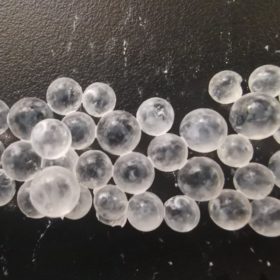
Passive solar module cooling based on hydrogels beads and nanofluids
A British-Egyptian research group has tested the use of hydrogels beads for PV module cooling. The micro-sized particles were saturated with aluminium oxide (Al2O3) water-based nanofluids and placed below the simulated PV panels. The experiment showed, according to the scientists, that the hydrogels beads were able to significantly reduce the temperature by between 17.9 and 16.3 degrees Celsius.
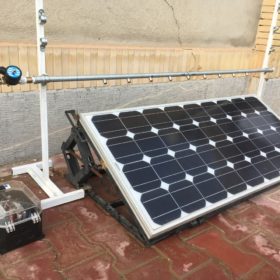
Pulsating spray cooling system for PV modules
Iranian scientists have assessed a new active approach for solar module cooling based on water spraying. Water sprayed from different angles can reduce the operating temperature of PV modules, with limited water consumption. However, the team noted that they have yet to assess the economic viability of the system.
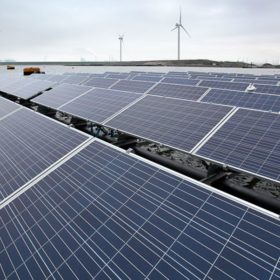
System design key to enhancing cooling effect of water in floating PV
Researchers in the Netherlands and Singapore have measured irradiance-weighted average temperatures of floating PV systems in both countries and have compared the results with reference rooftop and ground-mounted PV systems. They have discovered that floating PV systems with open structures, which allow wind to pass beneath the modules, can provide a higher heat loss coefficient.
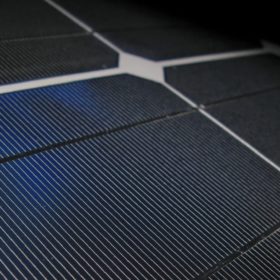
Water harvesting tech for PV panel cleaning and cooling
An international research team has proposed to use nighttime radiative cooling to harvest water from PV panels and reuse it for module cleaning during the daytime. According to their findings, the proposed system has, also, a beneficial effect on the modules’ operating temperature.
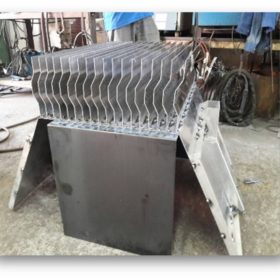
Solar module passive cooling with lapping fins
Malaysian researchers have proposed a new passive technology for solar module cooling based on fin heat sinks. The tech ensures lower PV system payback times and reduces operating module temperatures by up to 26 C.
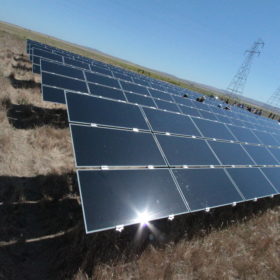
New approach for convective solar module cooling
A US research team claims to have demonstrated that packing PV modules in close proximity can exponentially increase convective heat transfer of a solar park. The scientists analyzed three different module arrangements and compared them to the common row-organized panel configuration.
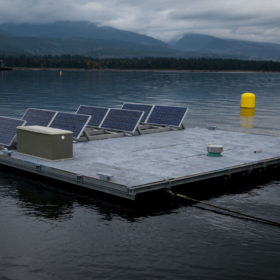
Active cooling for PV modules in floating arrays
Saudi Arabian and Pakistani scientists have created a serpentine cooling block structure to improve the efficiency of PV panels in floating solar projects by around 1.5%. The cooling block can be filled via a low-cost, 15.6 W commercial 12 V DC water pump with cool water.
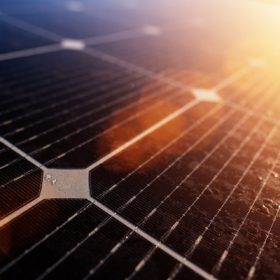
Lowering costs for PV cooling assessments
Researchers in Malaysia have developed a new, cheaper method to assess PV cooling techniques. Designers and manufacturers of PV cooling systems could follow the parameters of the new approach to evaluate the performance and bankability of their own devices, the scientists claimed.
