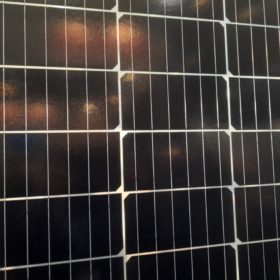
Module price hike impacting middle-sized PV projects in South Korea
The continuous rise in solar panel prices may affect PV projects of up to 1 MW tendered by the Korea Energy Agency and the domestic solar module industry may not be able to provide the necessary production capacity to respond to the recent supply bottleneck.
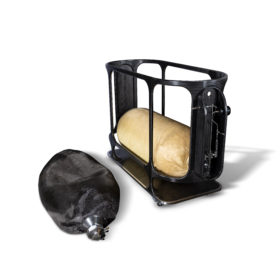
The Hydrogen Stream: Hydrogen-powered heavy-lift unmanned aerial vehicle from Korea
UK research firm Wood Mackenzie reports that Northeast Asia and Europe are expected to become the main hydrogen importers, accounting for 55% of seaborne hydrogen trade, whereas Australia, the Middle East and, possibly, Russia and the U.S. have the greatest export potential. Plug Power and Lhyfe closed a deal to build green hydrogen generation plants throughout Europe.
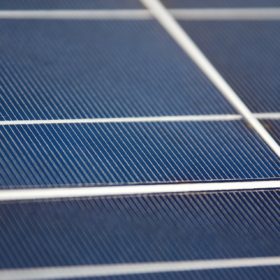
SDN opens heterojunction module factory in South Korea
Planned to be located in Gwangju, in southwestern Korea, the new factory is expected to reach a capacity of 385 MW and to produce 550 W panels.
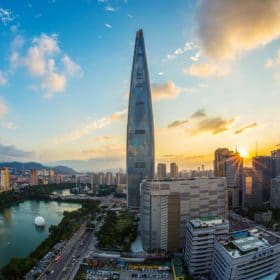
South Korea allocates 2 GW in PV tender, final average price drops to $0.118/kWh
Selected projects will be awarded a fixed rate under a 20-year contract under the country’s renewable energy certificate (REC) scheme and will sell electricity to local power distributors.
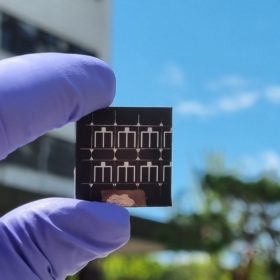
Cadmium-free kesterite solar cell with 9.82% efficiency
Researchers in South Korea have fabricated a cadmium-free heterojunction kesterite solar cell based on a zinc sulfide oxide Zn(O,S) buffer layer. They used a one-minute ammonium sulfide (NH4)2S treatment process for surface cleaning and passivation of the cell’s CZTSSe absorber.
South Korea deployed 1 GW of solar in Q1 2021
According to new figures by the Korean Energy Agency, South Korea seems on track to have another successful year in terms of newly deployed PV. According to local experts, however, this will not be enough to achieve the Korean government’s goal of 20% renewable generation by 2030.
South Korea kicks off 2 GW PV tender
The Korean Energy Agency has included PV projects exceeding 20 MW in size for the first time in its solar energy procurement scheme. Selected projects will be awarded a fixed rate under a 20-year contract under the country’s renewable energy certificate (REC) scheme and will sell electricity to local power distributors.
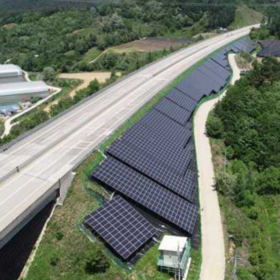
South Korea wants to build large-scale PV along highways
The new plan comes on top of a scheme launched in late March to deploy solar using railway infrastructure. The Korean government expects private developers will build solar plants on the highways’ idle sites for a combined capacity of 243 MW by 2025.
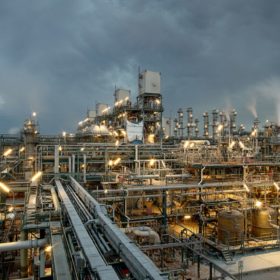
OCI increases production capacity at Malaysian polysilicon factory
OCI has revealed plans to invest $55 million to expand production at its Malaysian manufacturing facility from 30,000 to 35,000 metric tons.

South Korea deployed 4.1 GW of solar in 2020
Last year saw a record for solar, in terms of newly deployed capacity. This year, however, growth may be limited by new regulations for project siting.
