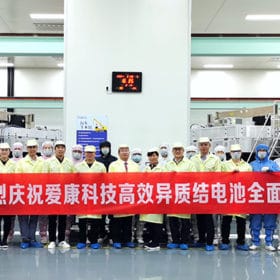
Chinese PV Industry Brief: Akcome achieves 24.2% efficiency for heterojunction cell in mass production
The solar cell manufacturer claims to have achieved the record efficiency at its 2 GW Huzhou, in northern Zhejiang province. Meanwhile, PV production equipment supplier Jinchen is raising funds for the development of its plasma-enhanced chemical vapor deposition (PECVD) technology for heterojunction cell production lines.

The Hydrogen Stream: strong push from France, new plans and deals in UK, Italy, Brazil, Philippines, Saudi Arabia, Portugal
The nascent hydrogen economy has seen a good amount of developments in a week that showed an increasing number of players taking part in the game. In the UK, British Airways has invested in hydrogen-electric aircraft developer ZeroAvia with a focus on hydrogen-electric power solutions for 50-plus-seat aircraft. In Brazil, Petrobras has joined forces with Siemens to develop green hydrogen solutions. In Portugal, the government and the European Investment Bank signed a non-binding memorandum of understanding for hydrogen cooperation.
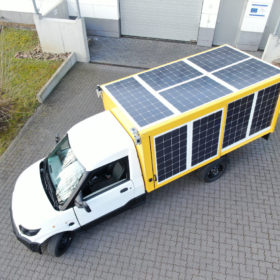
Vehicle-integrated PV for light commercial vehicles
A German consortium is building a light commercial truck prototype powered by 10 PV modules featuring Meyer Burger’s heterojunction cells. Initial estimates suggest that the panels could cover more than 25% of a vehicle’s total annual driving distance, and researcher Robby Peibst told pv magazine that the vehicle-integrated photovoltaic market could hit 5 GW by 2030.
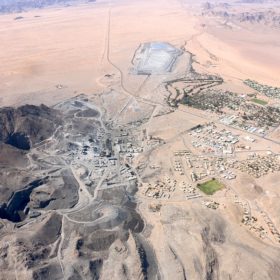
Unsubsidized solar for underground zinc-lead mine in Namibia
Canadian mining company Trevali will buy power from a solar plant located near its Rosh Pinah mine under a 15-year power purchase agreement.

Italy launches first solar energy community in social housing project
An energy community in northern Italy will integrate a PV installation with a storage system to power 48 households of a social housing project and a fleet of rented electric vehicles. It is a collective effort that could be replicable as soon as 2023.
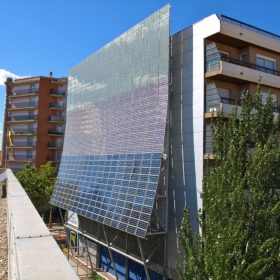
PCM-based passive cooling for BIPV systems
Indian scientists tested four kinds of phase change materials (PCMs) for solar module cooling in building-integrated photovoltaics. The PCMs were encapsulated with the PV system and the building envelopes and were also found to be beneficial to the thermal comfort inside the buildings.
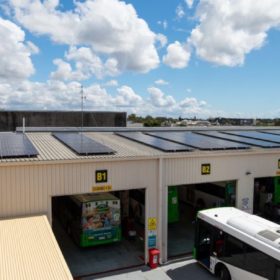
PV-powered ‘megawall’ to charge electric bus fleet
Australian public transport operator Transdev will use a “green mobility megawall” comprising 250 solar modules and 10 Tesla Powerwall units to charge two new electric buses in Brisbane.
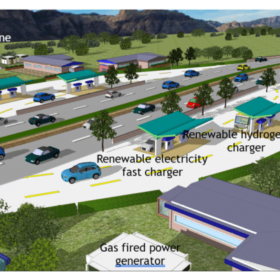
Solar powers novel green hydrogen fuel technology
A homegrown technology developed by the University of Newcastle and Southern Green Gas has seen the development of a novel green hydrogen fuel and carbon-neutral green methane. The fuel was demonstrated in Hyundai’s Nexo hydrogen fuel cell SUV in Sydney.

Africa’s solarized digitalization agenda
The seventh session of the Africa Regional Forum on Sustainable Development convened on the theme of “Building forward better towards a resilient and green Africa to achieve the 2030 & 2063 Agenda” and promote the economic, social and environmental dimensions of sustainable development.
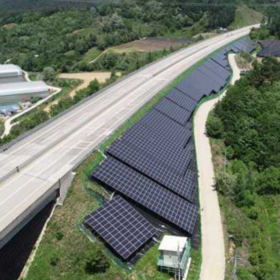
South Korea wants to build large-scale PV along highways
The new plan comes on top of a scheme launched in late March to deploy solar using railway infrastructure. The Korean government expects private developers will build solar plants on the highways’ idle sites for a combined capacity of 243 MW by 2025.
