
Chinese PV Industry Brief: China adds 102.48 GW of solar in H1
China’s National Energy Administration (NEA) says the country installed 102.48 GW of new solar capacity in the first half of 2024, bringing its total installed solar capacity to approximately 710 GW.

China to conduct comprehensive safety overhaul of battery storage facilities
China’s regulators are reportedly considering a comprehensive fire safety inspection and upgrades of operating energy storage facilities. For older storage stations, enhancing fire safety measures will significantly increase non-technical costs, potentially up to CNY 0.2 per Wh ($0.028/Wh).

Chinese PV Industry Brief: ZNShine Solar plans Hong Kong listing
ZNShine Solar says it has applied to list H-shares on the Hong Kong Stock Exchange (HKEX). The company runs three factories in China with a total capacity of about 10 GW.
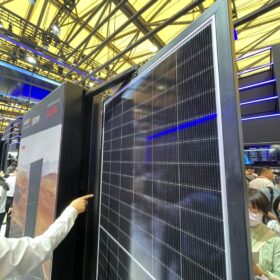
Chinese PV Industry Brief: Longi to mass-produce back contact solar cells
Longi has announced plans to produce its new hybrid passivated back contact (HPBC) 2.0 solar cells at a 12.5 GW facility in Xixian New Area, Shaanxi province.
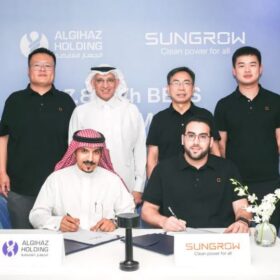
Sungrow secures 7.8 GWh battery storage deal from Saudi Arabia
China’s Sungrow has signed three landmark energy storage contracts with Saudi Arabia’s Algihaz Holding, amounting to the world’s largest grid-side storage order. Each project will have a capacity of 2.6 GWh, totaling 7.8 GWh.
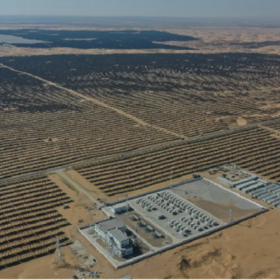
China Three Gorges to build 16 GW renewables cluster in Inner Mongolia
China Three Gorges has announced plans to build a 16 GW renewables cluster in China’s Inner Mongolia region, including 8 GW of solar, 4 GW of wind, a 200 MW solar thermal system, a 4 GW coal plant, and a 500 MWh energy storage system.
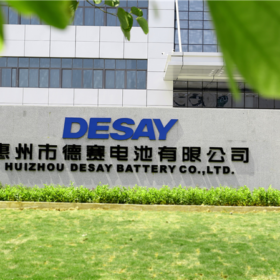
Desay Battery, Victory Giant Technology partner on China’s largest user-side energy storage project
The project, located in Victory Giant Technology Industrial Park in Huizhou, Guangdong Province, is designed to have a capacity of 121 MW/630 MWh, making it the largest commercial and industrial (C&I) energy storage station in China.

Chinese PV Industry Brief: Beijing probes EU investment barriers for PV
The Chinese government is launching an investigation to determine whether the European Union is blocking Chinese solar investments.
Longi, Aiko Solar, TCL Zhonghuan, Tongwei to post H1 losses
Longi says it expects a net loss of CNY 4.8 billion ($660.2 million) for the first half of 2024, while Tongwei is bracing for a CNY 3 billion loss. Aiko Solar and TCL Zhonghuan, meanwhile, are predicting losses of CNY 2.9 billion and CNY 1.4 billion, respectively.
China to impose stricter requirements on PV manufacturing
The new provisions are intended to reduce overcapacity in the market while selecting the most efficient technologies and products.
