Lebanon introduces peer-to-peer renewable energy trading

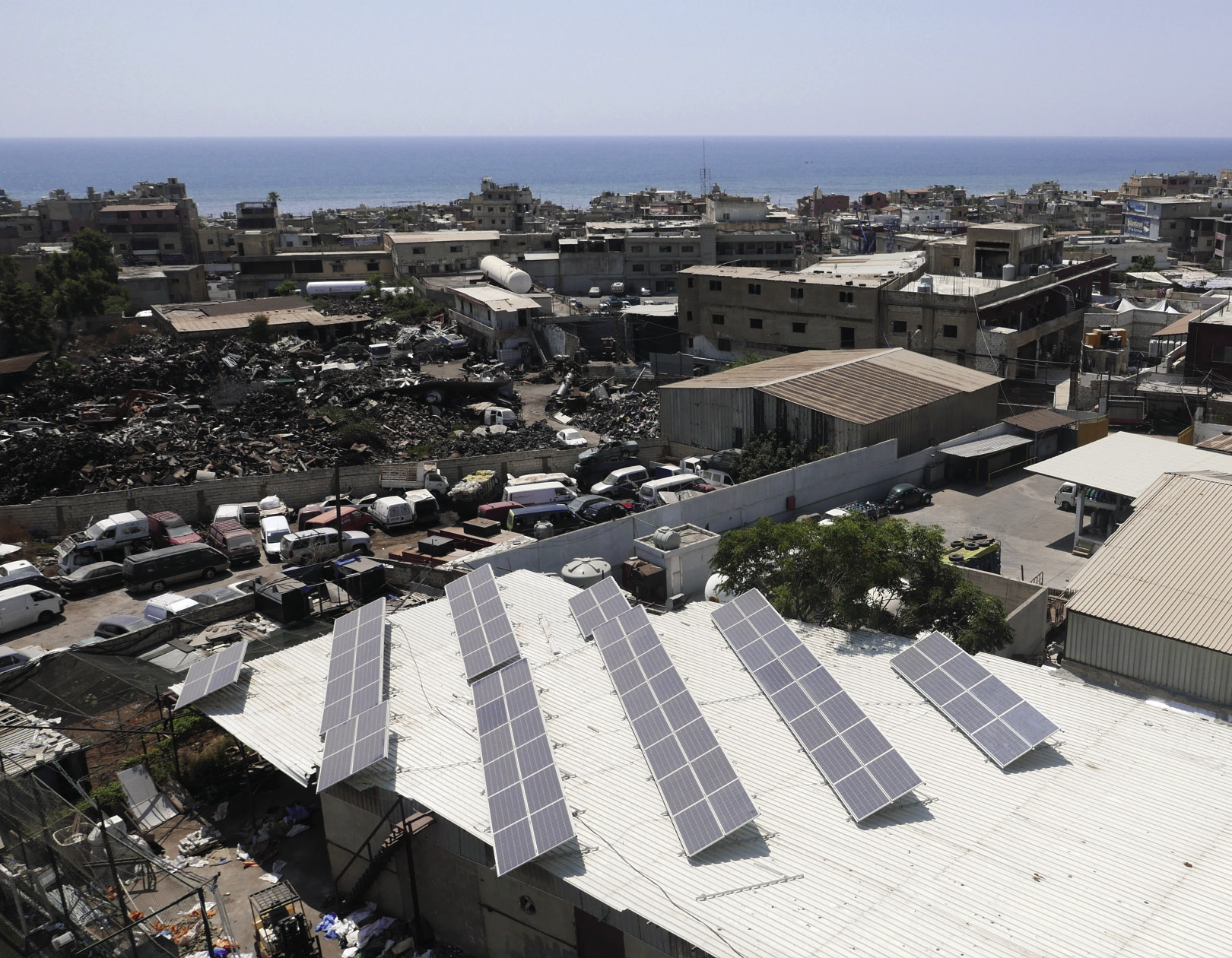
On Dec. 14, the Lebanese parliament passed the Decentralized Renewable Energy Law (DRE), which deals with two types of regulations: net-metering and peer-to-peer contracts between private sector entities.
Pierre El Khoury, general director and president of the Lebanese Center for Energy Conservation (LCEC) board, told pv magazine that the “LCEC expects the DRE law will create momentum for some additional 800 to 1,200 MW in the next few years.”
Peer-to-peer contracts between buyers and sellers are limited to renewable energy, with a maximum capacity of 10 MW per project. When a buyer and the seller are located on the same or adjacent land plots, peer-to-peer power exchanges can take place without using the national grid of state-owned utility Electricité du Liban (EDL). When projects sell generated electricity far from a production site, power trading must occur through wheeling, using the EDL grid.
“In a congested city with high-rise buildings like Beirut, entities that do not have enough space on their rooftop can now and thanks to the DRE law use available spaces anywhere in Lebanon,” said El Khoury.
Projects that use the wheeling option will also have to pay wheeling fees to EDL. These fees will be determined by Lebanon’s energy regulator, which has not been appointed yet. In addition to lacking a regulator at present, the intermittent operation of Lebanon’s electricity grid could pose another challenge to the implementation of the DRE law.
El Khoury said that EDL is only supplying electricity today for about six to 10 hours per day. However, he said that “the medium voltage network of EDL is energized all the time, so new peer-to-peer projects could connect to the medium voltage at a first stage. The LCEC estimates that with more solar (and other renewable energy technologies) to be connected to the EDL grid, EDL supply will increase significantly in a relatively short period of time.”
The new DRE law has also introduced various types of net metering, such as individual net metering, multiple-tenants net metering, collective net metering, and other options.
Marc Ayoub, associate fellow at the American University of Beirut’s Issam Fares Institute and a non-resident fellow at the Tahrir Institute for Middle East Policy, told pv magazine that “since 2011, net metering has been a decision taken at the level of the board of EDL and renewed on a yearly basis, just until the [country’s] economic collapse (2018-19) where no more meters were installed.” Therefore, the DRE law is the first time net metering “is mentioned in a law, or legalized in a law issued by the Lebanese parliament,” he said.
Since 2020, Lebanon’s solar sector has been booming because of off-grid photovoltaic and battery installations developed at the residential and commercial levels.
“Those are all potential net metering subscribers who can put their excess power generated from solar on the national grid,” said Ayoub.
For this to happen, Lebanon needs a reliable network with electricity flowing at all times and a central utility that installs meters and balances the electricity profiles of net-metering subscribers.
“This is why laws are not enough, and a holistic approach for reforms at all levels of the [electricity] sector is required, including generation, transmission and distribution of electricity,” he said.
Ayoub added that the establishment of an independent and empowered regulatory authority that can meet its duties under the DRE law is also a priority.
Lebanon installed less than 100 MW of solar in 2020. The country now has about 1,300 MW of PV capacity, mainly from small solar-plus-battery systems.
This content is protected by copyright and may not be reused. If you want to cooperate with us and would like to reuse some of our content, please contact: [email protected].

Please login to comment

[…] In conclusion, the introduction of the Decentralized Renewable Energy Law in Lebanon marks an essential milestone in the country’s transition towards a more sustainable and clean energy future. This legislation promotes the adoption of renewable energy sources, encourages private sector investment, and fosters job creation in the renewable sector. Additionally, it paves the way for the country to achieve its target of generating 30% of its energy from renewable sources by 2030. As more Lebanese individuals and businesses embrace the benefits of renewable energy, Lebanon moves closer to a brighter, greener future where it can enjoy enhanced energy security, reduced power outages, and long-term environmental benefits. First Reported on: pv-magazine.com […]
[…] In conclusion, the introduction of the Decentralized Renewable Energy Law in Lebanon marks an essential milestone in the country’s transition towards a more sustainable and clean energy future. This legislation promotes the adoption of renewable energy sources, encourages private sector investment, and fosters job creation in the renewable sector. Additionally, it paves the way for the country to achieve its target of generating 30% of its energy from renewable sources by 2030. As more Lebanese individuals and businesses embrace the benefits of renewable energy, Lebanon moves closer to a brighter, greener future where it can enjoy enhanced energy security, reduced power outages, and long-term environmental benefits. First Reported on: pv-magazine.com […]
[…] » …Saznajte više […]