David Carroll

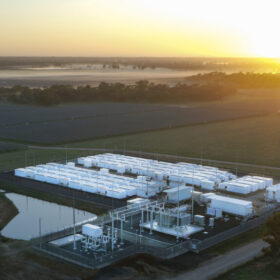
Edify energizes 150 MW/300 MWh battery in Australia
Edify Energy has commissioned the 150 MW/300 MWh Riverina and Darlington Point Energy Storage System in New South Wales, Australia.
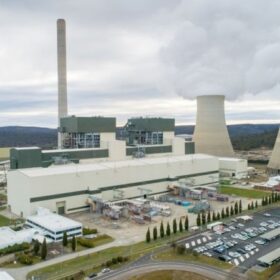
EnergyAustralia pushes ahead with 2 GWh battery at coal plants
EnergyAustralia’s plans to install a 500 MW/2,000 MWh big battery storage system in the Australian state of New South Wales are gaining momentum, as the Hong Kong-owned generator has secured approval to conduct site investigation works.
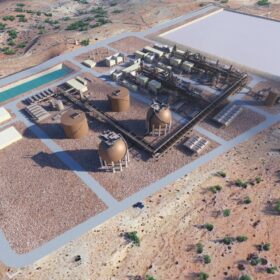
Hydrostor strikes deal for compressed air energy storage facility in Australia
Hydrostor has signed a deal with miner Perilya to build a 200 MW/1,600 MWh advanced compressed air energy storage facility in a disused mine cavity in New South Wales, Australia.
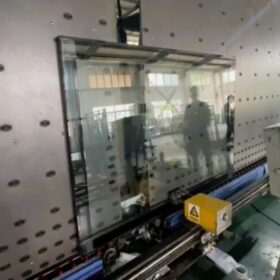
ClearVue next-gen ‘solar window’ powers through mass production run
Australia’s ClearVue Technologies says it has confirmed the scalability and “commercial viability” of its second-generation integrated glazing units, following a mass production run using a standard manufacturing line at a factory in China.
Neoen targets 10 GW of renewables in Australia by 2030
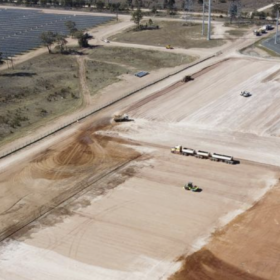
Neoen – already Australia’s largest clean energy player with more than 3 GW of large-scale solar, wind, and battery storage capacity in operation or under construction – now aims to triple its renewables capacity by 2030.
RayGen opens 4 MW ‘solar hydro’ plant in Australia
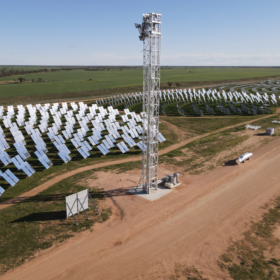
Australian energy tech startup RayGen has officially opened a 4 MW solar array and long-duration energy storage project in the state of Victoria. It describes it as the world’s “highest-efficiency PV project” operating at utility scale.
Australia backs 248 GW pipeline to counter reliability challenges
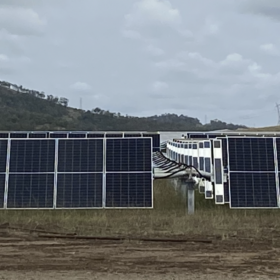
The Australian Energy Market Operator (AEMO) says that 248 GW of proposed generation projects, storage installations, transmission developments, and government energy programs have the potential to address many of the risks in its latest market forecast – if they are delivered to schedule.
Australian shipbuilder to deliver world’s largest all-electric ferry
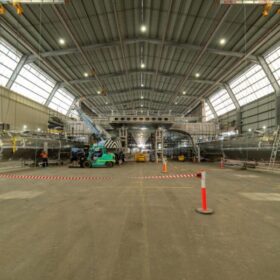
Australian’s Incat Tasmania is building the world’s largest all-electric ship at its shipyards in Hobart. The 130-metre-long vessel is to be fitted with a 40 MWh battery energy storage system that will power a series of electric propulsion system and waterjets.
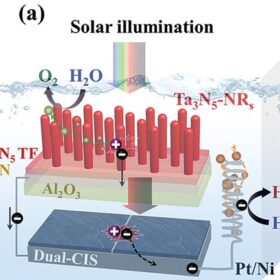
The Hydrogen Stream: Water splitting with solar-to-hydrogen efficiency of 12%
A Japanese team is working on a solar water splitting system with a 12% solar-to-hydrogen efficiency, while UK researchers have identified the reason why graphene’s dense crystalline structure is much more permeable to protons.
Australian startup aims to produce hydrogen with 30% less electricity
The Commonwealth Scientific and Industrial Research Organisation (CSIRO), Australia’s national science agency, has teamed up with RFC Ambrian to form a new company to commercialize electrolysis tech. CSIRO said the aim is to produce hydrogen with 30% less electricity than existing alkaline and polymer electrolyte membrane technologies.
