Emiliano Bellini


Israel requires PV systems on new residential, commercial buildings
Israel has introduced requirements for PV system installations on all new non-residential buildings with rooftop areas above 250 square meters and new detached residential buildings with roofs larger than 100 square meters.

Mitsubishi testing aquifer thermal energy storage for renewables
The Japanese conglomerate and the Osaka Metropolitan University are testing an aquifer thermal energy storage system that directly uses 10,000 m3 of groundwater stored at 5 C in a cooling well. It is intended to store renewable energy and produce cooling for air conditioning in the summer or heating for the winter.
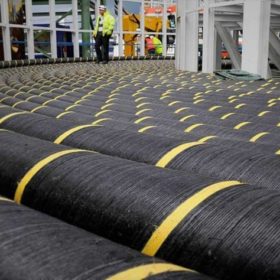
UK rejects CfD bid for 10.5 GW Morocco solar-wind subsea cable
The UK government has rejected a contract-for-difference (CfD) application for the proposed Xlinks interconnector, a 3,800 km submarine cable to deliver power from a planned 10.5 GW solar-wind facility in Morocco to the UK grid.

Belgium expected to reach 33.6 GW of PV capacity by 2035
Belgian grid operator Elia says the country might almost double its installed PV capacity from around 12.6 GW in 2025 to 22.5 GW at the end of 2030.
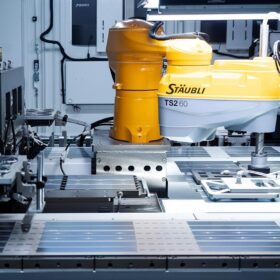
Tongwei achieves 91.7% bifaciality factor for 722 W TOPCon solar module
The Chinese manufacturer said the result was confirmed by TÜV Rheinland. It was achieved through a sunken pyramid structure that reportedly achieves selective-texture on the non-electrode area of rear-side and a zebra-crossing passivation contact structure that is said to ensure excellent passivation.
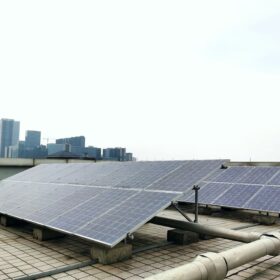
Guyana launches net billing scheme for rooftop PV
Guyana has introduced a net billing program for rooftop PV systems up to 100 kW and for larger systems based on a customer’s maximum demand. It aims to expand distributed generation and reduce grid dependency.

Photovoltaics for agromining
Researchers in France have investigated how photovoltaic power generation can be combined with the growth of hyperaccumulating plants in disused, contaminated brownfield land and have found this combination could help increase the profitability of the so-called agromining – a plant-based approach to cleaning up contaminated environments.
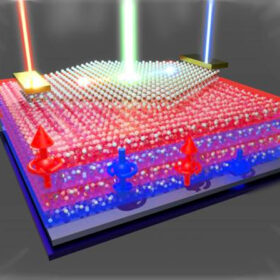
New device could pave way for magnetic controllable photovoltaic devices
Scientists in Japan have developed a device that enables external magnetic field control of magnetic injection current in the bulk photovoltaic effect (BPVE), a phenomenon not yet used in commercial solar cells. The research suggests a potential path toward regulating photocurrent in next-generation photovoltaic applications.
New research confirms residential PV tends to increase household power consumption
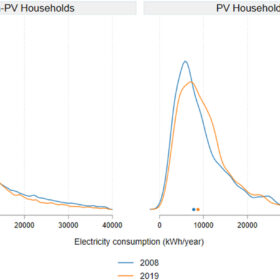
New Swiss research shows PV-powered homes can increase power consumption by up to 11% compared to non-solar households. This rise is linked to electric vehicle adoption or other high-usage appliances, which the study’s author notes is not inherently negative or wasteful.
SERIS achieves world record efficiency of 26.7% for perovskite-organic tandem solar cell
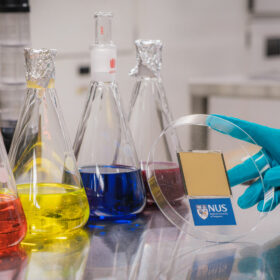
The tandem device is based on a bottom organic cell that can achieve a remarkable power conversion efficiency of 17.9% and a high short-circuit current density of 28.60 mA cm2. Furthermore, it uses a top perovskite solar cell with an open-circuit voltage of 1.37 V and a fill factor of 85.5%.
