Emiliano Bellini

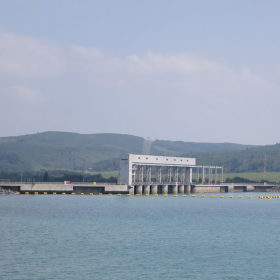
Canadian hydropower dam to be coupled with 180 MW of lithium-ion battery storage
TransAlta has planned to start construction on the storage facility in March 2023 and to complete it within nine months. The 180 MW battery facility is designed to be charged by the existing Ghost Hydroelectric facility when demand is lower.
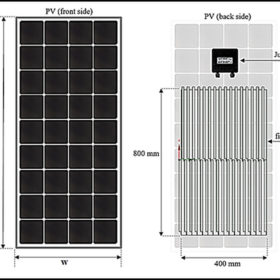
Multi-level fin heat sinks for solar module cooling
Developed by Malaysian scientists, the proposed multi-level aluminum fin heat sinks (MLFHS) were found able to reduce the module operating temperature by up to 8.45 degrees Celsius and increase power yield by up to 10.75%. The system cost was estimated at $0.60/W.
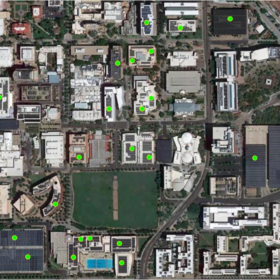
The panel and the city
US researchers have investigated how rooftop PV systems may affect air and building temperature in urban environments and, conversely, how the urban heat island (UHI) effect may have a negative impact on PV system performance. Their work considered urban air temperature, urban air pollution, the partial shading of the PV system, soiling, building heating and cooling loads, and outdoor shade.
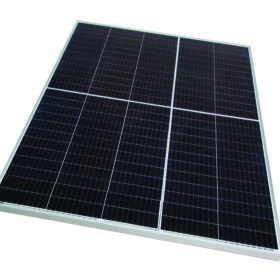
FuturaSun launches rooftop solar module with 390-410 W output
The new product measures 1754x1098x30 mm and weighs in at 21 kg. It features a temperature coefficient of -0.35% per degree Celsius and a power conversion efficiency of up to 21.29%.
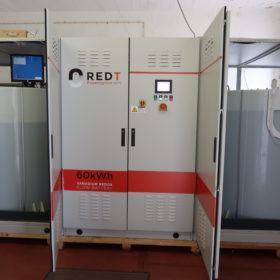
Vanadium redox flow battery to control extreme power ramps in rooftop PV
Researchers in Portugal have tested how vanadium redox flow batteries can be integrated with rooftop PV to balance the system load to ensure firm power output. They proposed a 5 kW/60 kWh battery configuration for a 6.7 kW building-integrated PV microgrid. According to their findings, the battery can be used in different energy management strategy scenarios to better complement solar photovoltaic generation.
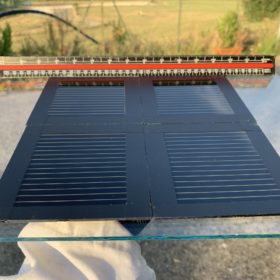
Perovskite solar module with 18.45% efficiency via co-solvent dilution strategy
The module was fabricated with methylammonium lead iodide (MAPbI3) perovskite solar cells via low-cost spin coating. The panel also achieved an open-circuit voltage of 16.07 V, a short-circuit current of 69.52 mA, and a fill factor of 75.35%.
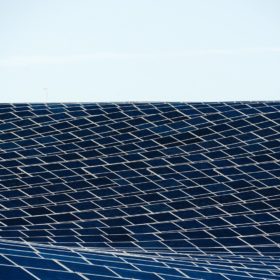
Italy allocates 710 MW of solar in seventh renewables auction
In the procurement exercise, the Italian authorities selected 49 solar projects with a capacity of less than 10 MW and 11 solar parks ranging in size from 13.2 MW to 92.4 MW. The lowest bid came in at €0.06263/kWh and was offered for a 5.9 MW solar project located in the province of Perugia, in the Italian central region of Umbria.

Italy introduces 11-month retroactive incentive cut on PV systems over 20 kW
The incentive cut will apply only for the period from February 1, 2022, to December 31, 2022, and will reduce the tariffs paid by the GSE to PV system operators under the Conto Energia regime, depending on the zonal energy price, with the incentive reduction being proportional to the increase in energy prices.
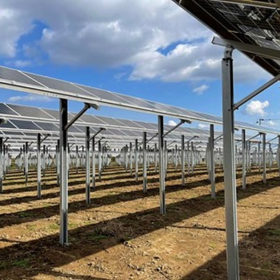
Mounting system for agrivoltaics
Designed by Chinese provider Mibet, the mounting structure can be used for different crop types. The system offers a tilt angle of up to 30 degrees and can host either framed or frameless solar modules.
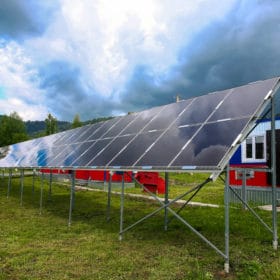
Russia deployed 233 MW of solar in 2021
Most of the deployed capacity comes from utility scale solar plants selected in the country’s tender scheme for renewables.
