Emiliano Bellini

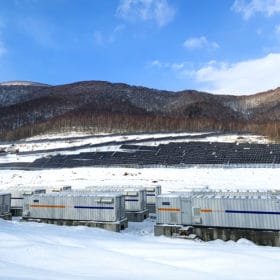
Solar-plus-storage as an antidote to grid congestion in Japan’s northern island of Hokkaido
Chinese inverter maker Sungrow has switched on a 6 MW / 21 MWh solar-plus-storage facility on the island. The FIT project’s connected AC capacity is limited to only 845 kW, but the containerized storage solution provided by the company ensures its viability.
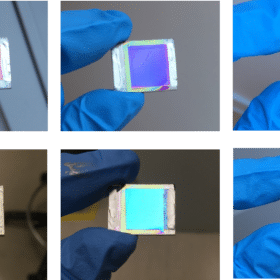
Effective approaches to build colored perovskite solar cells
Scientists in Singapore have conducted a review of all existing methods to produce colorful opaque and semitransparent perovskite solar cells for applications in BIPV and urban environments. They identified two general approaches consisting of coloring the perovskites via external or internal modifications.
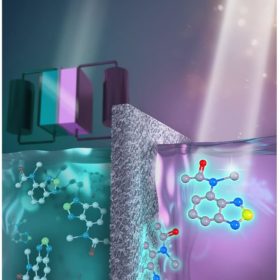
Redox flow batteries with fluorescence detection
Argonne National Laboratory researchers have found a way to use fluorescence to monitor the performance of redox flow batteries in real time. They used 2,1,3-benzothiadiazole as a redox-active molecule to store energy in the electrolytes. The molecule works as an energy carrier and signals a problem known as “crossover.”
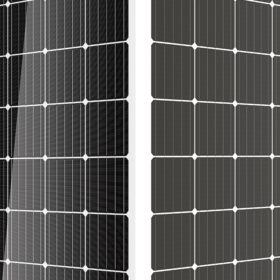
Major inverter makers unveil products compatible with 210mm solar modules
Chinese solar module manufacturer Trina Solar has listed all inverter producers that in the past weeks have unveiled new devices or upgraded products for solar panels based on 210mm silicon wafers. Huawei, Sineng, Sungrow, SMA, GoodWe, Ginlong, and Kstar have all reportedly launched or are planning to launch centralized or string inverters that may better cope with bigger and more powerful panels.
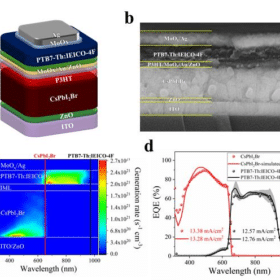
Hybrid tandem perovskite solar cell with 18.04% efficiency
South Korean researchers claim to have developed a PV cell with a higher efficiency rate than any other tandem cell based on perovskite and organic materials.
Performance improvements for anomalous photovoltaic effect
A German research team has created a new solar cell architecture with self-assembled, three-dimensional nanocomposite thin film. The special cell configuration purportedly improves electrical output by a factor of five.

Russia to tender 500 MW of solar in 2021
The country’s cumulative installed PV capacity reached 1.7 GW at the end of 2019, as a result of the grid-connected projects tendered by the Russian government between 2014 and 2019. The remaining 500 MW quota of the 2.2 GW tendering scheme should be assigned this year.

Romania improves rebate scheme to speed up rooftop PV development
The Romanian government has changed the rules of the Casa Verde Fotovoltaice (green PV home) scheme to support residential solar installations under the country’s net metering regime. The new provisions improve the installation process and settlement of rebate payments.

Kenya launches tender to add solar to 22 diesel mini-grids
Kenyan utility KPLC wants to retrofit 23 diesel mini-grids by adding wind and solar power generators. PV is the only option available for 21 of the selected sites.
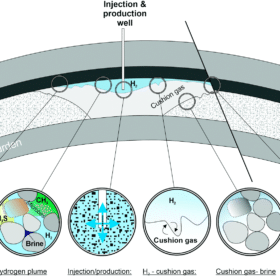
Key challenges for underground hydrogen storage
An international research team has presented challenges and knowledge gaps in the implementation of large scale underground storage of hydrogen. The main issues associated with this technology relate to the fluid flow behavior of hydrogen in subsurface reservoirs, geochemical reactions caused by hydrogen injection, biotic reactions caused by excess hydrogen, and the geomechanical response of the subsurface to hydrogen storage.
