Emiliano Bellini

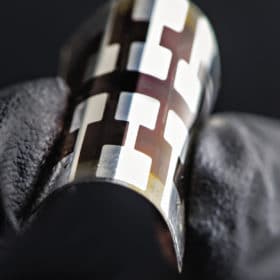
Global research team sets up database for emerging PV tech
An international research team has set up a new database with crucial data on emerging technologies for perovskite, organic, and dye-sensitized solar cells. The platform also includes information on the best flexible solar cells.
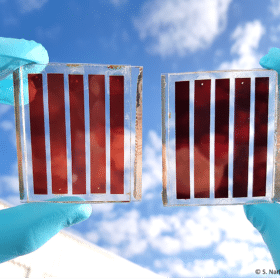
Semi-transparent dye-sensitized solar module with 8.7% efficiency
The mini-panel showed a short circuit current of 58.1 mA, an open circuit voltage of 3.63 V, and a fill factor of 58.26%. It has a power output is 122.9 mW and an active area of 14 cm2.

New safety standard for PV hazard control
The American National Standards Institute (ANSI) and the Standards Council of Canada (SCC) have approved the new UL 3741 standard.
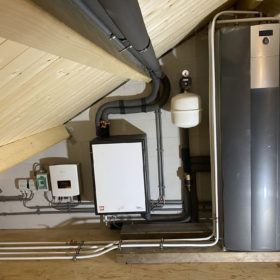
Photovoltaic-thermal district heating networks are feasible
A group of scientists and companies in the Netherlands has tested a PVT heating concept in a green district and has found that the proposed design, which is also based on underground storage and the use of heat pumps, is technically and economically feasible.
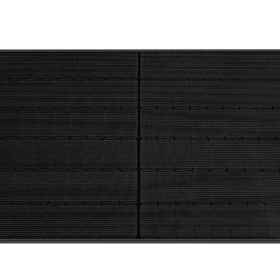
Panasonic launches module series compatible with its Evervolt battery
Available in four different products, the series features a conversion efficiency of 20-21.2%. Two of the panels are packaged in a sleek, all-black aesthetic.

Offshore floating PV may reach maturity in 2030
According to a report from DNV GL, the North Sea may host around 100 MW of floating solar capacity by 2030, and 500 MW by 2035. The LCOE of offshore PV systems is currently estimated at around €354/MWh but in the future it should be close to that of ground-mounted solar parks.
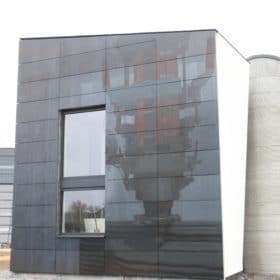
Solar facade for 3D-printed concrete house
Taiwan-based Heliartec has deployed a solar facade on a 3D-printed concrete house in Belgium. It said it installed the solar facade with the “circular construction” philosophy in mind.

The world has 53 million hectares of abandoned cropland suitable for PV deployment
Researchers in Norway have mapped all cropland areas that were abandoned between 1992 and 2015 and found that the vast majority is suitable for PV and bioenergy deployment. Around 30% is located in Asia, followed by the Americas, with a 28% share, and Africa, with a percentage of 22%. Europe and Oceania had shares of 20% and 5%, respectively.
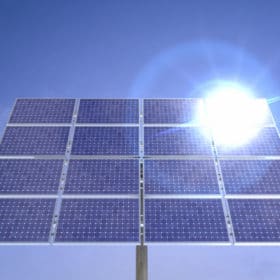
Cooling PV panels with shallow geothermal energy
Iraqi researchers have demonstrated the technical and economical feasibility of using shallow geothermal energy to cool PV systems. They tested two different techniques – a closed-loop system and an open-cycle system – to reduce power losses from 30% to up to 4.1%.
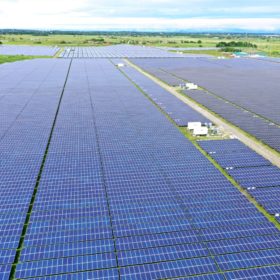
Philippines to host 1 GW of solar under PPAs
Solar Philippines is planning to deploy several unsubsidized solar plants in the provinces of Batangas, Cavite, Nueva Ecija, and Tarlac.
