Emiliano Bellini

Bangladesh issues tender to develop up to 60 MW of solar
Through the procurement, the Bangladesh Power Development Board is seeking developers for the construction of grid-connected solar power plants on a build, own, operate basis.
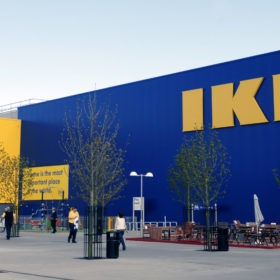
Ikea begins online sale of PV panels in Italy
A few weeks after launching the sale of its “Solstrale” modules in Germany, the Swedish furniture giant also began offering online its PV panels and systems throughout Italy.
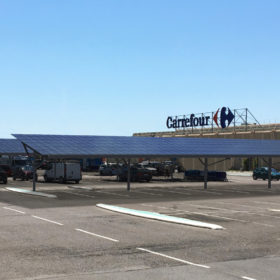
Carrefour deploys solar on 36 superstores in France
The French retailer will use energy generated by the PV installations exclusively for self-consumption. The projects will be developed by French developer Urbasolar.
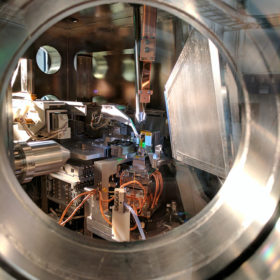
Understanding why cesium and rubidium salt improve the yield of perovskite solar cells
The addition of either salt enables more even distribution of halide atoms within the perovskite material – key to increasing cell conversion efficiency. The explanation should speed up the process of identifying the best perovskite mixes.

Russian Duma approves net metering for solar up to 15 kW
Under the new rules, expected to come into force by the end of the year, Russian residential PV system owners will be able to sell excess power to the grid. The provisions were discussed for almost two years before yesterday’s vote.
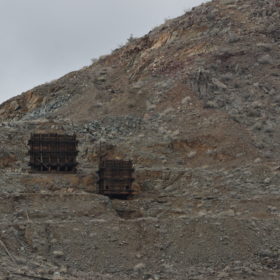
Silver price to rise 7% this year
According to the Silver Institute, demand for the precious metal in the solar industry will remain stable up to 2022, despite recent changes in China’s PV policy.
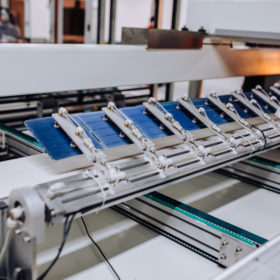
Kness Group commissions module factory in Ukraine
The panel fab, with a production capacity of 200 MW, is in Vinnytsia, central Ukraine. The factory’s capacity is expected to double by the end of the year.

Large-scale solar arrives in Quebec
State-owned utility Hydro-Quebec will deploy its first 10 MW of ground-mounted solar to test the technology at the province’s latitude. The hydropower company is also using storage to better manage winter peak demand. Bifacial modules will be included in both projects.
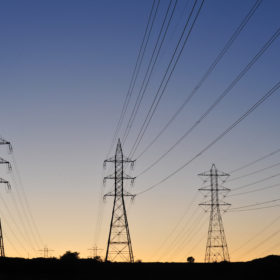
Super-grids vs prosumer states: storage may decide the battle
Indra Overland, head of the Center for Energy Research at the Norwegian Institute for International Affairs, explains how the world’s future energy landscape may include pan-regional super-grids. However, prosumer states seeking energy independence could also be in the mix. According to Overland, the two developments will go hand in hand and the balance between them will be determined by the competitiveness of storage technologies.
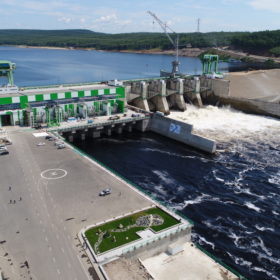
First hybrid hydro-PV project announced in Russia
Russian module manufacturer Hevel will deploy 1.2 MW of solar at an hydropower facility operated by local energy provider Rushydro in the Amur region. The solar installation is intended to help the company better manage the power plant, while also reducing its operational costs.
