Emiliano Bellini


Spain’s Unieléctrica enters solar business with 50 MW project
The Spanish power trader is planning to build its first large-scale solar power plant in the region of Murcia. The facility is intended for self-consumption and to be financed with own funds.
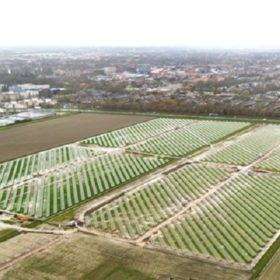
Dutch government to improve SDE+ program for sub-1 MW PV projects
The Netherlands government intends to create two more ad hoc categories for solar projects not exceeding 1 MW, and to grant them a higher level of incentive compared to those of big solar parks. The change is due the success of larger projects in previous SDE+ rounds.

Tunisia reveals winners of 70 MW solar tender
Through the tender, the Tunisian government has awarded contracts for six 10 MW and four 1 MW projects. All have received preliminary approval from the Minister of Energy, Mines and Renewable Energies, Khaled Kaddour at the beginning of May.

Puerto Rico reviews utility-scale PV projects totaling over 280 MW
Puerto Rico’s Financial Oversight and Management Board (JSF) is examining a series of infrastructure projects that, if approved, would be fast-tracked for development and construction. Some of the PV arrays included in the infrastructure round already have PPAs signed with local utility PREPA. Two include co-located storage.

Italy’s Water Alliance launches €110 million tender to buy power from renewables
The purchased electricity will be used to power the companies’ purifiers, waste water lifting stations, treatment plants of drinking water, cathodic protection systems, and several offices.
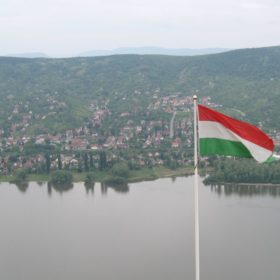
Hungary unexpectedly terminates FIT for PV projects ranging from 50 to 500 kW
The Hungarian government has amended its recently issued support scheme METAR, in order to introduce a tight deadline for residential and commercial PV, which will, in reality, mean the end of most of projects in this segment. The METAR scheme had been approved by the European Commission last summer.

Nepal launches tender for large-scale solar
The Nepal Electricity Authority is seeking bids for projects ranging from 1 MW to 5 MW across 25 sites.

Ukraine has now 63 MW of solar under net metering
The net metering scheme, which is open to rooftop solar PV projects not exceeding 30 kW in size, was introduced by the Ukrainian government in 2015.

Algeria set to resume plans for large-scale solar with strong local content commitment
In a conversation with pv magazine, Mouloud Bakli, president of the Algerian solar energy association, Club Energia (branch of FCE), says that multiple solar pipelines are set to be restarted by the Algerian government. Furthermore, two new tenders, for Independent Power Producer, and solar hybrid power, projects, will be issued by the end of Q2 2018. For all of these plans, local content requirement rules will apply. The existing local PV module industry, on the other hand, is expected to reach a combined annual capacity of 550 MW by the end of the year, while several manufacturers of mounting structures, cables, solar glass and junction boxes are already operating in the market.
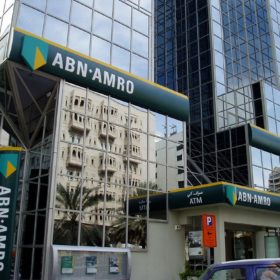
ABN Amro launches €200 million fund for energy transition
The fund is expected to make equity capital investments in the range of €10 million to €25 million, mostly in the Netherlands and Northwest Europe.
