Emiliano Bellini


Trump keeps digging coal, but wants solar on the wall with Mexico
President Trump suggested paying for the construction of his border wall with Mexico through the sale of power from solar installations.

Hevel to build 40 MW of hybrid solar-diesel power plants in Russian Far East
The projects will be developed in remote areas with no access to power. The installations are expected to reduce diesel consumption in those areas by up to 50%.

Juwi secures another permit for 450 MW solar project in southern Spain
The giant solar plant was given the greenlight by Spain’s National Commission on Financial Markets and Competition (CNMC). The project was previously given approval by Spain’s Ministry of Environmental Affairs in mid-2015.

Work begins on 4.4 MW PV plant in Cuba
The Cuban province of Sancti Spíritus, which will host the plant, is planning to deploy 63 MW of PV capacity by 2019.
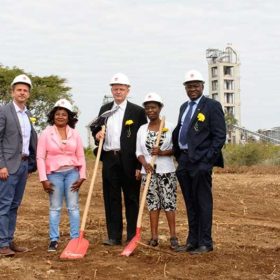
Namibia to host another large-scale PV plant
The 5 MW plant will be located at a cement factory near Otavi owned by local manufacturer Ohorongo Cement. The project is being developed by German independent power producer SunEQ four Investment.
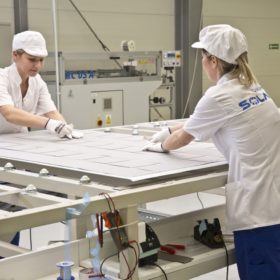
Polish module maker Bruk-Bet Solar raises annual capacity to 120 MW
The Polish solar module manufacturer equipped its factory with a Matrix Assembly System MAS3.8 from the Swiss manufacturer Meyer Burger, with two STR2000 stringers and the NG3622 XLCP laminator.
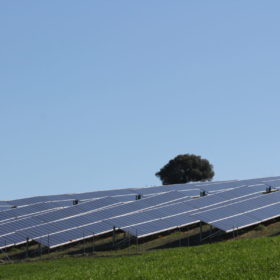
Spain’s Environment Ministry downsizes giant solar project in Extremadura by 170 MW
The Calzadilla de los Barros solar project was planned to have a capacity of 394 MW. The project is one of several giant PV projects announced across several Spanish southern regions over the past years.
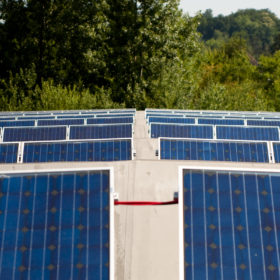
Belgium: Flanders sees new PV installations almost double so far this year
Once a leading solar market, the Belgian macro-region of Flanders keeps showing signs of robust growth in new installations in the first five months of this year, after installing 103 MW of solar in 2016.
France adds 78 MW of PV capacity in Q1 2017
As of the end of March 2017, mainland France had 6,853 MW of installed PV power, while its overseas territories reached 367 MW. French cumulative PV capacity has surpassed 7.2 GW.
Poland to hold auction for solar and renewables on June 29
The contry’s second auction for renewable energies will be open to solar, wind and hydro power projects ranging in size from 40 kW to 1 MW. Solar is expected to have the largest share.
