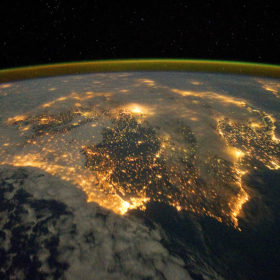
Spain’s third interconnection with Morocco could be Europe’s chance for African PV – or a boost for coal
The two nations have signed a memorandum of understanding to build a third power link connecting their electricity systems. The news will again initiate hope for the transfer of solar energy from Africa to Europe, but is that hope justified?

World’s first solar-powered passenger car on roads next year
A Dutch start-up has designed an electric vehicle that runs solely on solar energy, and aims to deliver its first models next year. The car will also be available to lease.
Turkey’s 1 GW Konya project in doubt
Project partners Hanwha Q Cells and local company Kalyon Enerji appear to have ended their partnership and to be negotiating the terms of a ‘divorce’.
UK government offering little encouragement to the solar sector says the industry
A conference in London explored the next steps for renewables in the U.K. There was widespread agreement solar has been left in the cold by a government unwilling to alter the current market dynamics.
Turkey added 2,416 MW of solar capacity in 2018… kind of
Turkey appears to have installed a staggering 2,416 MW of new PV capacity in 2018, although careful study of the data may curb any excitement and solar’s role in the Turkish electricity mix remains negligible, with coal still dominant.
Greece adds just 41 MW of solar in 2018
The amount of new PV added by Greece in 2018 is tiny but signals the sector has been restarted, mainly thanks to renewable energy tenders. However, significant challenges remain when it comes to meeting a 2020 solar energy target.
Canadian-UK funding for pilot smart grid solutions
A competition backed by public funding from the governments of the two nations is seeking proposals for projects that will help electricity grids transition to clean and flexible energy.
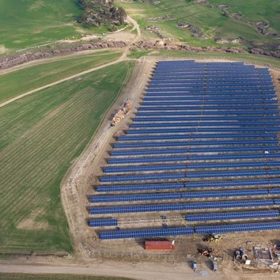
Cyprus to see a new wave of subsidy-free PV in 2019
Cyprus has introduced several policy schemes supporting solar development over the years, yet the single most important boost for PV technology on the island is a plan that backs a new wave of what are considered to be subsidy-free projects.
Greece awards 62 MW of small-scale PV, cancels tender for larger projects in the same day
Greece ran two separate tenders for PV on December 10. However, the Greek energy regulator has decided not to award the winners of the tender for large-scale farms, due to lack of adequate competition. The tender for the large projects will be repeated next year.
UK: A hard Brexit would add millions to consumer electricity bills
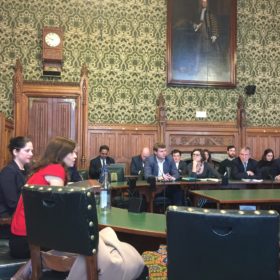
All round, it has been an interesting week for the U.K. to say the least, and the energy sector was no exception. In addition to the country’s All-Party Parliamentary Group for Renewable and Sustainable Energy (PRASEG) organizing a debate on the Capacity Market; a forum in London discussed grid operator’s flexibility; and a new report was released claiming a hard Brexit would add millions to consumer electricity bills.
