
How to delaminate end-of-life solar modules with ultrasonic cavitation
A research team has developed a solvent-free method using ultrasonic cavitation to delaminate end-of-life crystalline-silicon PV modules, fully separating the glass and front EVA layer while partially releasing c-Si fragments. The proposed approach achieved an 82.2% mass-based delamination efficiency, highlighting ultrasonic cavitation as a sustainable alternative for PV module recycling.
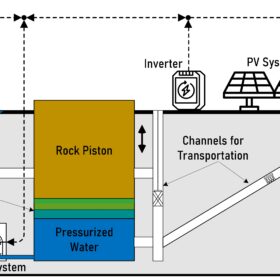
PV-driven hydraulic hydro storage may hit $0.022/kWh LCOE in the U.S.
An international study has demonstrated that utility-scale solar PV paired with hydraulic hydro storage (HHS) could reach an LCOE as low as $0.022/kWh in select U.S. regions. The system could provide GWh-scale, cost-competitive, and highly reliable long-duration storage, capable of powering large commercial districts with minimal environmental impact.
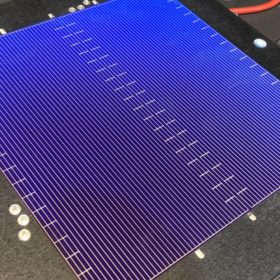
The impact of annealing on copper-plated heterojunction solar cells
A UNSW-led team found that annealing conditions significantly affect stress, strain, and microstructure in copper-plated heterojunction solar cell contacts, with fast annealing increasing microstrain in both copper and indium tin oxide.

How much agrivoltaic shading is enough
Spanish researchers found that semi-transparent silicon PV greenhouses boosted tomato fruit weight by 25% while generating 726.8 kWh over two seasons, outperforming cadmium telluride PV and shaded controls. The PV-Si system balanced sunlight, temperature, and energy, showing strong agrivoltaic potential.
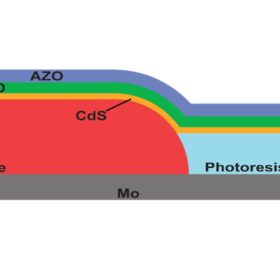
Copper, indium, selenium micro-islands pave the way for next-gen micro-concentrator solar cells
A German research team has developed CuInSe₂ micro-concentrator solar cells using laser-assisted metal-organic chemical vapor deposition to grow indium islands directly on molybdenum-coated glass, forming absorber arrays without masks or patterning. The not-yet-optimized micro-modules achieved up to 0.65% efficiency under one sun, with gains of up to 250% under concentrated illumination.
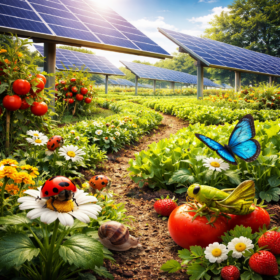
Solar parks reshape soil biodiversity, plant traits
A study of 20 solar parks in southern France found that soil biodiversity and respiration drop significantly under panels, especially in mown areas, while plant traits like height and leaf area can increase under grazing. The researchers highlighted that climate, management type, and solar shading all shape soil and plant responses.
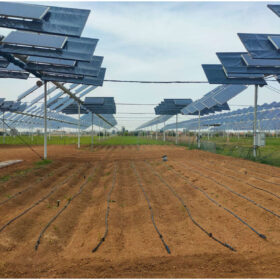
Multi-year field study finds that agrivoltaics can support healthy potato yields
Multi-year field trials conducted in Italy show that agrivoltaic systems can support healthy potato yields without major losses. Strategic shading and dynamic light management during critical growth stages proved key to maintaining productivity.
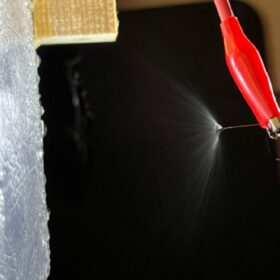
Electrospray cooling can boost PV panel performance with minimal water use
Researchers in Turkey optimized electrospray cooling for PV panels, achieving optimal power output with minimal water use and a compact, energy-efficient setup. Their study identified irradiance, flow rate, voltage, and nozzle distance as ideal parameters.
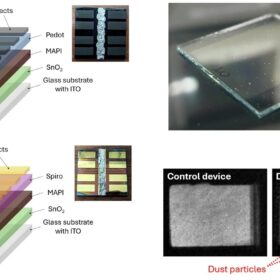
Perovskite solar cells can be made without expensive cleanrooms
Swansea University researchers found that perovskite solar cells can tolerate dusty fabrication environments, performing almost as well as those made in cleanrooms. The findings suggest low-cost, scalable production may be possible without ultra-sterile conditions, potentially accelerating cell and module manufacturing.
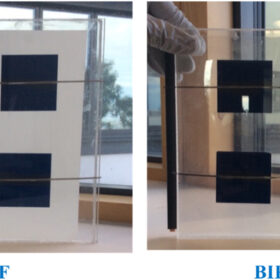
New solar window concept integrates polymer-dispersed liquid crystal to enable switchable transparency
Researchers in the United Kingdom have developed a smart window that combines switchable polymer-dispersed liquid crystal with integrated PV cells, offering controllable transparency and electricity generation. The system balances light, heat, and solar protection while maintaining high visual quality and stable performance, according to its creators.
