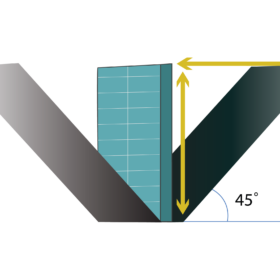
Radiative cooling tech for vertical solar panels
Developed by a US-Saudi research group, the novel technique employs two 45-degree inclined mirrors on the two sides of a PV module. On the back side, a spectral selective reflector enables the thermal radiation to be directed to the sky while preventing the back of a module from heating up by the scattered sunlight.
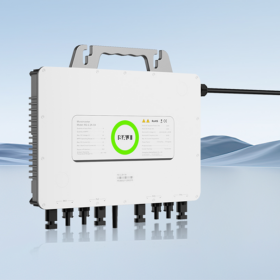
SAJ launches new microinverters with 4 MPPT channels
SAJ’s new M2 microinverters support PV panels ranging in size from 400 W to 700 W. They have a maximum output of 2,250 VA, with four maximum power point tracking (MPPT) channels. The company claims a peak efficiency of 97%.
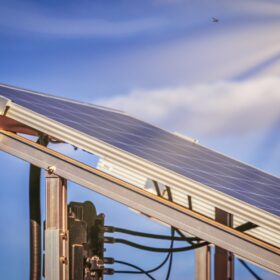
Optimal tilt angle for agrivoltaic projects in Mediterranean region
Scientists in Turkey determined the optimal tilt angle for agrivoltaic projects associated with different crops in the central Mediterranean region, and other regions with similar latitude and climatic conditions.

Israel raises tariffs for commercial PV by up to 33%
Israel’s Electricity Authority says it has reached a decision on tariffs, as current rates do not ensure the viability of large rooftop PV projects. It has also raised the tariff for stored electricity sold at peak times.

Heat pumps could lift people out of fuel poverty, say UK researchers
UK researchers have evaluated the impact that heat pumps could have on fuel poverty in England and Scotland. They have found that the benefits heat pumps can provide exist in both scenarios.

Shikun & Binui wins tender for 130 MW solar highway project in Israel
Israeli developer Shikun & Binui Energy says it will operate a 130 MW solar project next to a highway in Israel for a period of 25 years. It will also include up to 240 MWh of storage.
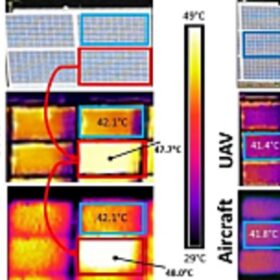
Drones vs. aircrafts for PV plant inspection
Scientists in Italy have investigated the performance of drones and a human-crewed airplanes for carrying out aerial infrared thermography inspections on PV power plants. According to their findings, airplanes may be more cost-effective.
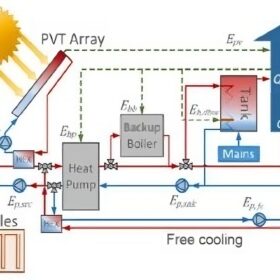
Hybridizing residential ground source heat pumps with PVT, free cooling
Researchers in Sweden sought to raise the efficiency of ground source heat pumps by combining their operation with that of PVT systems and free cooling. Through a series of simulations, they found that this integrated solution may reduce borehole length and land area requirements.
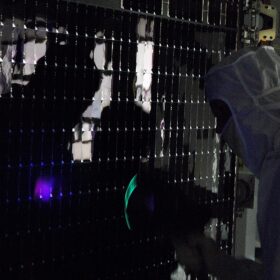
The impact of temperature on III-V solar cells
Scientists in Spain have analyzed the impact of temperature and spectral conditions on III-V solar cells employed in concentrator photovoltaic modules. They claim to have assessed the cell behavior under unprecedented operating condition.
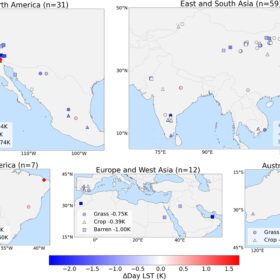
The effect of PV plants on albedo, vegetation, land temperature
Scientists have used remote sensing to analyze the effect solar farms have across 116 sites worldwide. They found that the cooling effect is higher during the daytime, with albedo decreasing by 0.016 for most facilities.
