Marian Willuhn

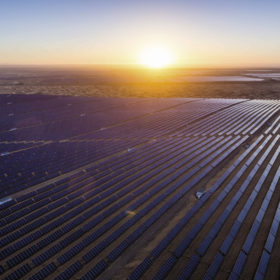
Chinese PV industry headed toward grid parity
Project delays and price changes due to fluctuating demand are disrupting the Chinese solar market. Researchers who have analyzed the situation claim that the nation’s PV industry will be back on track toward grid parity by the end of the year.

‘European cobalt supply hinges on circular economy’
Amid an uptake in EV sales, researchers are examining battery material supply chains. A report has indicated policy-driven circular economy strategies must be introduced in Europe if the bloc is to strengthen its resilience to volatility in the cobalt market.

Airbus charts path to zero emission aviation by 2035
At a press conference today, executives at the European airplane manufacturer explained how it will be possible to have market-ready zero-emission planes within 15 years.
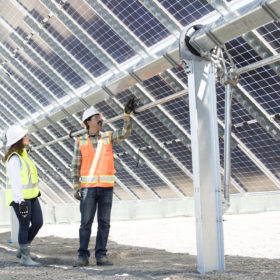
Nextracker inks 1 GW supply deal and claims up to 12% bifacial yield gain
The 1 GW fifth phase of the Mohammed bin Rashid Al Maktoum Solar Park in Dubai will feature NX Horizon trackers with the deal announced after the manufacturer published new bifacial yield gain claims.
Plasma enables smaller, more powerful NMC-811 cathodes
Batteries could shrink even more with smaller crystals in the cathodes. Battery packs in electric vehicles and consumer goods could become smaller, while still offering high performance.
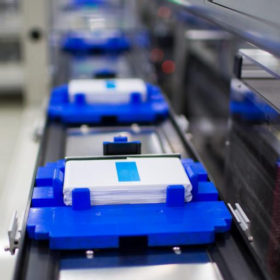
National lithium-ion battery supply chains ranked
Analysts at Bloomberg New Energy Finance have quantified the influence of markets around the world. The ranking supplies a snapshot of 25 countries and also offers a five-year outlook.

How long will the lithium supply last?
Researchers have sounded the alarm. If no serious efforts are made on second-life battery use, recycling and vehicle-to-grid applications, decarbonization efforts may hit the buffers a lot sooner than expected.

Divisions emerge ahead of EU Climate Law and Just Transition bill reading
The weeks ahead could prove decisive for the bloc’s decarbonization ambitions as the European Parliament prepares for several votes and legislative proposals from the commission. The European Climate Law and the Just Transition Fund are critical parts of the European Green Deal but remain points of contention at Brussels.
The weekend read: Coming around
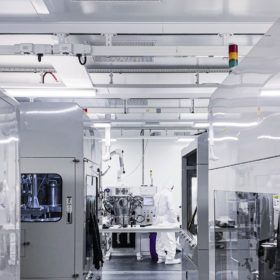
Given the number of batteries (primarily lithium-ion) that are required to decarbonize the power and mobility sectors, the industry is now preparing for a mountain of battery waste. Recycling is technically feasible, but is also subject to sensitive economics. The framework in which recycling companies can achieve the best life-cycle costs for batteries needs to be carefully enabled through policy – and it will likely include a mixture of technologies and business models, in order to allow life-cycle emissions of batteries to be brought down.
“Capacity deferral is the primary source of storage value”
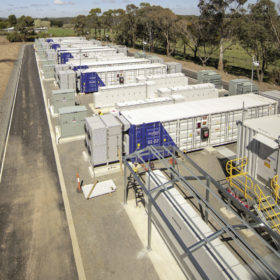
Big batteries derive most their value from replacing gas peaker plants and averting the installation of excessive amounts of transmission and generation infrastructure. However, batteries cannot replace all gas plants, MIT researchers found. From a holistic economics perspective, there is a certain share of storage that is considered cost-efficient. With battery costs declining, that share is constantly increasing.
