Marian Willuhn


Solar PV to grow 65-fold by 2050, 2°C target will be missed by a long shot – report
DNV GL has issued its annual Energy Transition Outlook. It reports that global electricity demand is set to grow by a factor of 2.5. Over half of this demand is expected to be met with renewable energy by 2050, while storage will play a key role. It adds that grid infrastructure expenditures are less related to variable renewable energy assets than to increasing energy demand. In the current scenario, meanwhile, global warming is likely to reach 2.6°C.
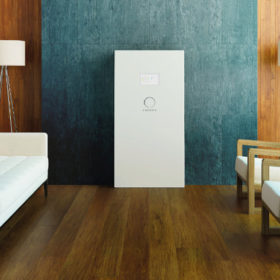
German equipment suppliers take lead in European storage market, report says
German suppliers may still play a central role in providing residential storage systems, however the increasing number of Asian manufacturers on the European market is undeniable. Particularly in the U.K. and Italy, they have captured the lion’s share of sales.

Porsche stalls polluting fuel amid ‘dieselgate’ and EV push
After the emissions scandal, many customers have turned their backs on diesel, partially due to environmental concerns, partially out of fear of a future bans on the fuel. Porsche says it has not had diesel engines in its portfolio since February, and will now scrap production altogether.
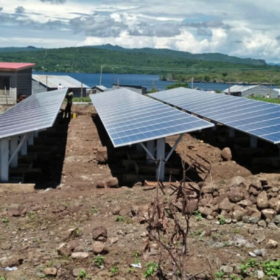
GE and Renewvia installing new off-grid systems in Africa
The two companies have installed systems in Kenya and the Democratic Republic of Congo to provide a cheap, secure energy supply. BloombergNEF has predicted the market for off-grid solar will grow considerably as it can meet the needs for universal energy supply at a cost competitive price.

Heraeus to partner with Ulbrich Solar Technologies for SCR production
The new Selectively Coated Ribbons (SCR) technology could improve yields by 2.2 Watts on module level, says the manufacturer. The new ribbons can also be used with existing equipment, omitting the need for manufacturers to invest in new production outlay, at a time when profit margins in module manufacturing are squeezed.
Centrica starts installation of Cornwall Local Energy Market
More than 100 free storage systems will given to residential and commercial users to maximize utilization rates of storage systems while reducing costs for grid operators. The algorithms behind the technology would improve the supply situation and shave peak demand.
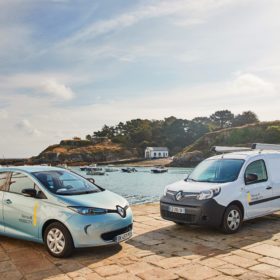
Renault deploys smart EV charging on island grid
The car manufacturer is deploying its second island project this year. Smart EV charging – and second-life EV batteries for stationary storage – are expected to help increase self-consumption, reduce carbon footprints and improve energy independence. The news comes amid a rising uptake of EVs in Europe.
The weekend Read: Soft services, hard impacts
The application of IoT, tapping, and analytics of big data, and much hyped applications like blockchain are making an impact on the solar PV sector and related devices, and also their interactions with the grid. But software has played an important role in the evolution of our industry dating back some 30 years.

300 MW Talasol project in Spain receives funding from EFSI
The subsidy free mega project is entering the next stage of its development. Funding is expected to be finalized in 4Q 2018 and commissioning in 2020. The project, funded by the European Fund for Strategic Investments (EFSI) will retail its electricity on the spot market, but will be secured through a financial hedge.
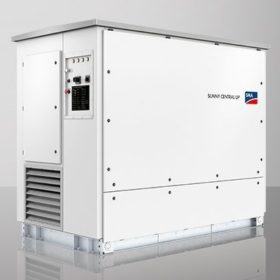
SMA presents new central inverter at REI
The German inverter giant says its latest central inverter offering has a capacity of 4.6 MW and offers the ability to connect AC and DC battery storage systems.
