Marian Willuhn

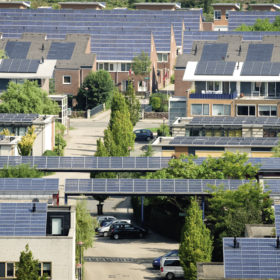
Residential solar could save energy system €1.77 bn in Andalusia alone – study
Looking at a scenario, in which the Spanish residential solar market is booming again, energy consultancy, ecoSynergies finds that the energy system could save billions, both in terms of CO2, and fuel and grid costs. Additionally, introducing the EU’s suggestion to fairly compensate prosumers for their surplus energy, would allow households to slash payback times for their solar systems by more than a half. In some cases, the amortization period could go down from 25 to seven years.

Video: Quality Roundtable Energy Taiwan 2018
LID mitigation in mono-PERC cells is technically feasible, according to Jay Lin and Karin Krauß, who spoke during pv magazine’s Quality Roundtable in Taiwan. The country’s rapidly growing floating PV market was also addressed.
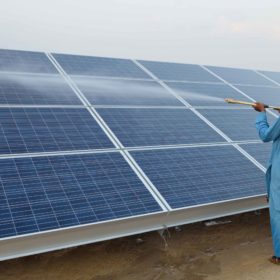
Study: High-risk through water use in solar sector
Though lauded at times as a water-saving technology, PV’s concentration in arid and remote regions, in conjunction with inefficient cleaning methods, can exacerbate water scarcity and prompt rising water tariffs for plant operators, according to a new report on Indian PV installations, published by analysts Bridge to India.

H1 2018 Inverter shipments: Utility-scale growth and China 31/5 fall-out
The global top three companies have not changed compared to the 2017 ranking. Still in the U.S., SMA has lost its pole position to Solaredge. Ingeteam, meanwhile, is capitalizing massively on stable growth in the utility-scale market, and jumps from rank 18 to fourth.

JA Solar supplies modules to Bangladesh’s first large-scale project
Bangladesh announced plans to install around 1.6 GW of solar capacity until 2021 to meet its growing energy demand. The 28 MW site is the first large-scale project to go online.

Leclanché: Revenues doubled, EBITDA in the red
While revenues have doubled year on year, Leclanché says its EBITDA is suffering from high operational expenses and one-off payments. However, the goal to post a positive EBITDA by 2020 is on track, it adds.
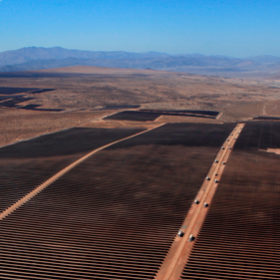
Acciona presents ‘world’s first’ blockchain renewable energy certification platform
The technology is said to use blockchain’s properties of providing secure real-time and fully transparent data. The company says that ensuring renewable energy certificates is becoming increasingly important. This is the first step towards a more comprehensive platform that seeks to cover renewable energy assets from other energy companies as well.
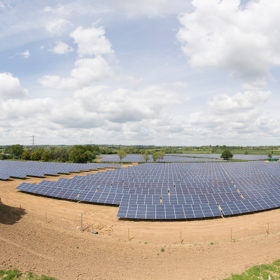
Renewables account for 31% of UK electricity, installations remain flat
The U.K. government has cold-shouldered PV with a row of disfavourable policies, which have put at risk the financial viability of new arrays. In the past few last years, the market has remained almost flat, with installations sitting at around 200 MW per year.
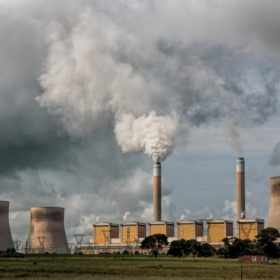
China to add 259 GW of coal capacity, satellite imagery shows
By analyzing satellite imagery, research group, Coalswarm has found that coal-fired power stations in China totaling 259 GW, which were supposed to have been scrapped, are being built. When fully commissioned, they will reportedly represent the equivalent of total coal-fired capacity in the United States. Not only does this news go against China’s current push into renewables, but also raises serious air pollution concerns at a time when levels should be decreasing.

Solar PV to grow 65-fold by 2050, 2°C target will be missed by a long shot – report
DNV GL has issued its annual Energy Transition Outlook. It reports that global electricity demand is set to grow by a factor of 2.5. Over half of this demand is expected to be met with renewable energy by 2050, while storage will play a key role. It adds that grid infrastructure expenditures are less related to variable renewable energy assets than to increasing energy demand. In the current scenario, meanwhile, global warming is likely to reach 2.6°C.
