Marija Maisch

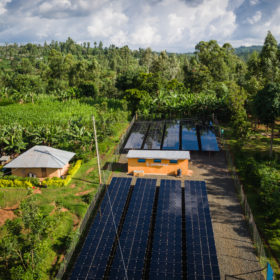
Cryptocurrency to accelerate solar minigrid rollout in Africa
South Africa-based Sun Exchange and U.S. minigrid developer, Powerhive have come together to step up minigrid deployment in rural Kenya by leveraging the crypto economy. The partnership is expected to catalyze up to $23 million of capital and fund around 150 new projects in the country’s power hungry areas.
Global energy investment in 2017 moved away from energy security and sustainability goals, finds IEA
Following a strong year for clean energy spending, 2017 saw a 7% decline in renewable power investment – to around $298 billion – while the share of fossil fuels in energy supply funding rose for the first time since 2014, according to the International Energy Agency in a report published today.
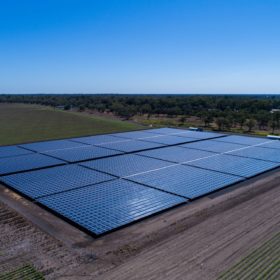
460MW in Down Under ready to commence construction
Construction works are expected to start soon on two utility-scale solar PV project in New South Wales with a combined capacity of more than 460 MW, as confirmed by German-based Belectric, which will handle the EPC and O&M duties on both sites.
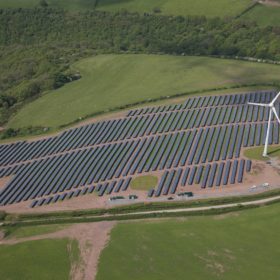
UK’s decarbonization depends on continued growth of EVs, RE, storage – National Grid
Outlining energy pathways for the next 30 years and beyond, the U.K.’s National Grid has released four different scenarios, considering growing electricity demand and a significant increase in energy infrastructure from new renewable generation and EV charging networks. Only two of them meet the U.K.’s 2050 carbon reduction target on the back of a large growth of renewables and energy storage, and almost completely decarbonized transport.
Solar corporate funding rises 15% YoY with $5.3 billion in H1 2018 – Mercom
Despite the uncertainty caused by U.S. solar panel import tariffs, deteriorating trade relations between the U.S. and China, and the looming consequences of China’s PV policy change, the solar industry saw a 15% YoY increase in corporate funding in the first half of 2018, on the back of a Q2 rebound, finds the latest Mercom Capital report.
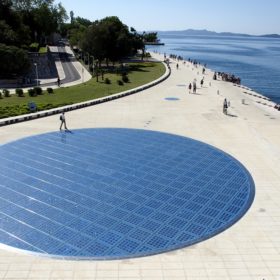
Balkan update: Croatia, Bosnia and Herzegovina ready for their biggest PV projects, Macedonia inaugurates first module fab
With Republika Srpska, one of the two entities of Bosnia and Herzegovina, announcing a tender to build a 65 MW solar PV plant; Croatia planning a 6.5 MW solar PV installation, to be built on the Island of Cres; and Macedonia welcoming its first solar panel manufacturing plant, capable of producing 20 MW annually – it has been a busy period for the small solar markets in the Balkans.

Basic Energy buys stake in 2 Thai EPC firms working on 220 MW Myanmar PV project
The Philippines-based energy company has signed the share purchase agreements to acquire a 15% stake in two Thai companies, which are building a 220 MW utility-scale solar power project in Myanmar.
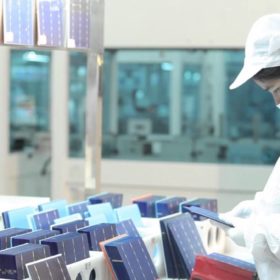
JinkoSolar posts lower shipment volumes, revenues for Q1, remains optimistic despite policy change
As forecast in its 2017 financial report, JinkoSolar shipped around 2 GW of modules in the first quarter of this year. Meanwhile, it did not adjust its forecast for 2018 shipments, in the range of 11.5 GW to 12 GW, despite the Chinese government’s cuts to installations.
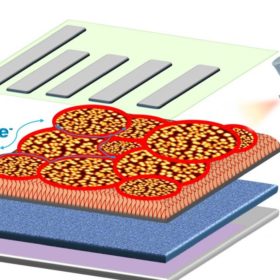
Researchers turn to spray coating in applying ETL to perovskites
Perovskites, a tempting low-cost alternative to crystalline silicon based solar cells, could be moving closer to commercial production thanks to a new way of applying the critical electron transport layer (ETL) pioneered by an international team of researchers.
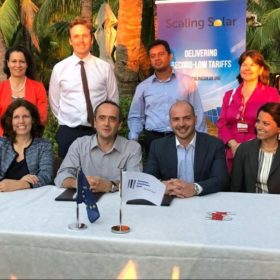
International investors provide $34 million for solar plant in Zambia
The Ngonye project proposed by Italian energy giant Enel Group and Zambia’s Industrial Development Corporation, will be financially underpinned by senior loans of up to $10 million from the International Finance Corporation, up to $12 million from IFC-Canada Climate Change Program and up to $11.75 million from the European Investment Bank.
