Mark Hutchins

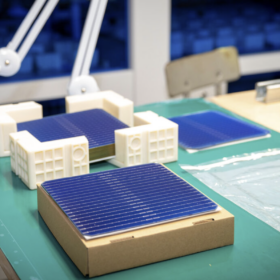
US solar’s push for domestic bliss
Incentives in the US Inflation Reduction Act (IRA) of 2022 drove a wave of new solar manufacturing announcements, and the country now has more than enough module capacity to meet domestic demand for several years. Policy shifts have created uncertainty, but continued tax credits and a focus on domestic industry have US manufacturers planning to expand cell and component production.
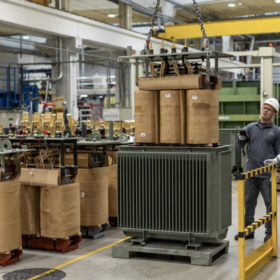
Global energy transition hits a hardware bottleneck
As transformer lead times double and US prices surge 79%, a manufacturing “supercycle” struggles to keep pace with the explosive growth of AI data centers and renewable energy.
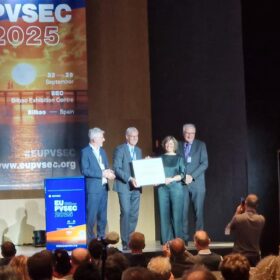
EU PVSEC 2025: Key takeaways
As the last of more than 1,100 scientific presentations wrap up today at the Bilbao Exhibition Center, pv magazine shares a few takeaways from an event that puts the latest solar technologies under the spotlight, and creates important connections between scientists and the solar industry.

‘Preaching to the unconverted’ – EUPVSEC 2025 kicks off in Bilbao
The annual European Photovoltaic Solar Energy Conference (EU PVSEC) got underway today, this year in Bilbao. Conversations on the first morning focused on the need for strong policy support across multiple areas of renewable energy. While the week is sure to be filled with new ideas on the technological side, it’s clear that ensuring policies to support further growth in renewable energy is a growing challenge. Those working in the solar industry and research community need to reach a wider audience, and one that may not be as easy to convince.
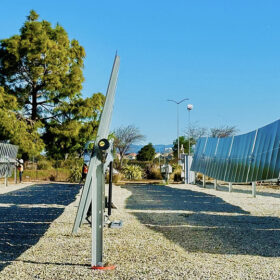
Hail damage to solar projects: 1% of filed claims, but over 50% of total losses
Hail damage has become a real headache for project developers in the United States, where growing deployment has increased exposure to weather-related risk. As project owners seek to limit the impact of hail on their bottom line, innovations in tracking systems and insurance can help.

Building a new solar industry segment
A study conducted by the German development agency Deutsche Gesellschaft für Internationale Zusammenarbeit (GIZ) in collaboration with India-based think tank the Center for Study of Science, Technology and Policy (CSTEP), found that India has the potential for more than 300 GW of building-integrated photovoltaic (BIPV) systems on its existing buildings alone. Moreover, according to a World Bank report, 70% of the buildings India will need to become a developed nation by 2047 are yet to be constructed, underscoring the vast future potential for BIPV systems in the country.

Uncovering UV degradation risks in solar panels
An interview with Fraunhofer ISE on new discoveries of ultraviolet degradation risks.

A better understanding of UV degradation
Performance loss from ultraviolet (UV) light has become a concern for new PV cells, though earlier lab tests may have overstated the issue. Paul Gebhardt, photovoltaic module reliability scientist at Fraunhofer Institute for Solar Energy Systems (ISE), outlines a mechanism that may have distorted earlier results.

Perovskite rollout gathers pace
Perovskite’s growing visibility at industry events in 2025 is a sign that perovskites have progressed beyond the small lab-made devices seen earlier this decade. The focus is now on developing materials, processes, and a supply chain ready for large-scale manufacturing and deployment.

Collaboration key to scaling new technology
Both the solar module and battery manufacturing industries have been dealing with excess production capacity in recent years, and each is undergoing its own set of market adjustments in 2025. This has meant challenging conditions for manufacturing equipment suppliers in either sector. But there is still plenty of opportunity to deploy the latest technologies at scale, and to assist suppliers moving into new regions. The long-term outlook for both sectors is strong, as pv magazine heard from Wang Yanqing, Chairman of solar and battery production equipment supplier Lead Intelligent, headquartered in Wuxi, China.
