Mark Hutchins

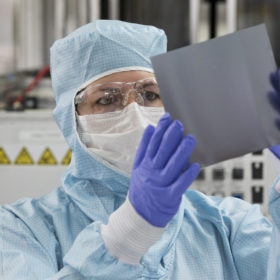
New technologies, new opportunities
UK-based analyst Exawatt and Germany’s Nexwafe published a white paper this week that takes a close look at the current state of PV manufacturing worldwide, and how Nexwafe’s innovative wafer production tech might fit into it. They said that if the potential of its Epiwafer can be realized, the PV industry may yet see “another revolution in wafer manufacturing.”
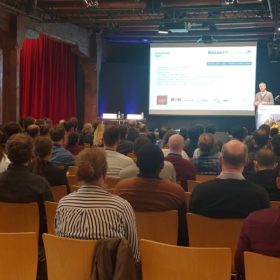
The solar tech check: Key takeaways from SiliconPV 2022
This week saw more than 300 scientists and PV experts converge in Konstanz, Germany for discussion of the latest development in PV cell technology, and for many the first chance for a face-to-face meeting in quite some time. pv magazine reports from the SiliconPV conference, where the PV research community revealed a strong focus on eliminating or optimizing the use of critical materials like silver and indium from cell production, alongside a wealth of improvements in efficiency and longevity that is still possible for silicon PV technology.
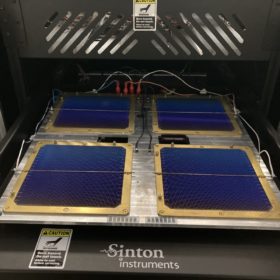
The Solar Tech Check: Toward 50-year modules, and how the numbers add up for HJT
This week sees new technoeconomic analysis published on different aspects/materials for heterojunction: Important to consider as Europe in particular looks to be betting big on this technology for its manufacturing comeback. And a new report from NREL in the United States examines progress in degradation and durability to increase module lifetimes.
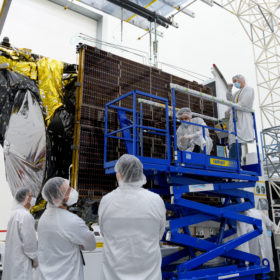
The Solar Tech Check: PV in space, and thin films stride forward
This week has seen NASA announce the completion of a new folding array set to power a mission deep into our solar system, while scientists continue to work on new applications to take such explorations even further from the sun. New measurements also promise routes to higher efficiency in cadmium-telluride PV, and details emerge of one of thinnest solar cells seen so far.

IEA outlines plan to rapidly reduce dominant role of Russia in Europe’s energy markets
The International Energy Agency today published a 10-point plan for Europe to reduce its reliance on natural gas imported from Russia. The plan would see Russian gas imports to EU member states reduced by one third within a year, and notes that further reductions within this timeframe would come with significant tradeoffs, likely to impact both energy prices and Europe’s Green Deal. The plan was presented by Fatih Birol, executive director of the IEA, in a virtual press conference held earlier today.
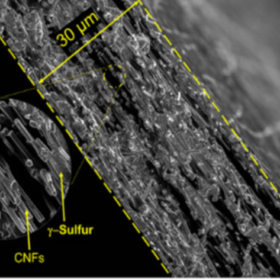
A 4,000 cycle lithium-sulfur battery
Scientists in the United States developed a lithium-sulfur battery using a commercially available carbonate electrolyte, that retained more than 80% of its initial capacity after 4000 cycles. The group used a vapor deposition process which unexpectedly produced a form of sulfur that did not react with the electrolyte, overcoming one of the key challenges for this battery chemistry.
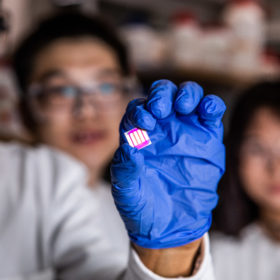
Making the case for perovskite quantum dots
Quantum dots, a type of semiconductor based on tiny nanometer sized particles, are a cause for excitement in many disciplines thanks to their unique electronic properties. In solar cell technology, quantum dots fabricated from perovskites could have several advantages over more commonly researched “bulk” perovskite materials, and researchers are beginning to take note of these. A group of scientists in China evaluated recent progress in perovskite quantum dot solar cells, noting both strong potential and a long way to go for this early-stage technology.
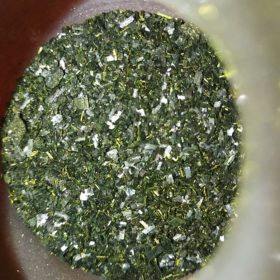
Doped carbon for a reliable lithium sulfur battery
Scientists in South Korea developed a porous carbon material that, when applied as a coating to the separator film in a lithium-sulfur battery, was shown to reduce an unwanted side effect and improve the battery’s performance and reliability. The coating is based on methylene blue, a type of salt commonly used in textile dying.
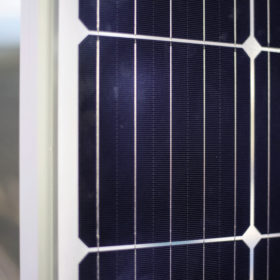
Powering up PERC-perovskite tandem cells
Perovskite-silicon tandem cells offer one of the surest pathways to much higher solar efficiencies, one that has moved close to commercialization in the past few years. Much of the work getting to this stage has naturally focused on developing a viable perovskite top cell. Optimizations to the silicon layer underneath, however, will also be important to the overall device function and efficiency. Scientists in Germany examined five different silicon cell concepts similar to those in mass production today, finding that with a few optimizations these could reach efficiencies up to 30.4%.
A solar cell you could make on the moon
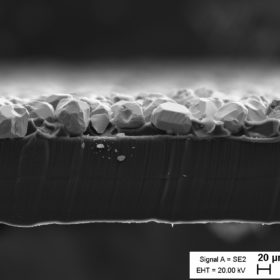
As part of a project headed by the European Space Agency investigating materials for long-term missions, scientists in Estonia are investigating a tiny iron-based crystal as a potential solar cell material. So far, the material has not achieved the sort of efficiency that would spark a lot of interest. These researchers, however, are interested in it for a different reason: Beyond planet Earth, the material is abundant enough that it could eventually be manufactured on the Moon or even Mars.
