Mark Hutchins

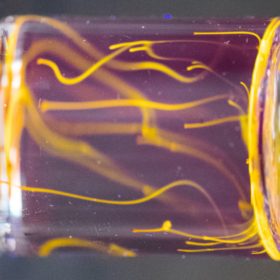
Designer molecules enable ‘two for one’ efficiency boost
Scientists in the U.S. have come a step closer to taking advantage of singlet fission – a phenomenon seen in certain solar cell materials that promises to greatly increase energy yield. By designing and testing various molecules, the group was able to better understand the fundamental processes behind the mechanism and optimize materials to better take advantage of it.
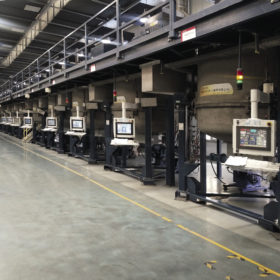
Canadian Solar plans new listing in China
Module manufacturing giant Canadian Solar says it has seen demand for modules bounce back in the second quarter of 2020, with module shipments and revenue for the period both exceeding guidance. The company is pressing ahead with plans for a second listing on a stock market in China as part of its strategy to deal with accelerating industry growth and market consolidation over the coming months.
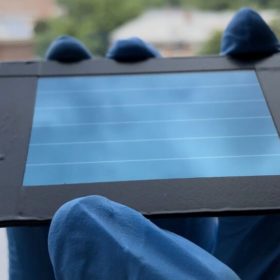
‘Spontaneous de-doping’ for 17.8%-efficient perovskite mini-module
U.S. scientists have found a new ‘de-doping’ process in perovskite solar cells that could cut production costs and produce better devices. They have used this to fabricate a mini-module with 17.8% efficiency.
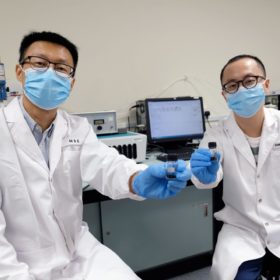
Low-cost catalysts for hydrogen production
Researchers in Singapore have taken a deep dive into spinel oxides – a class of materials known to act as a catalyst in the production of hydrogen through water electrolysis. Better understanding of how the materials work enabled the scientists to develop a machine learning model to predict their efficiency.
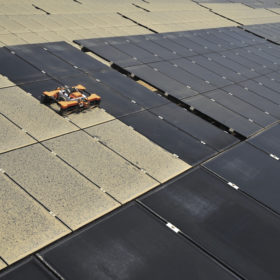
Getting serious about soiling
Scientists in the United States and India are investigating the impacts of soiling on PV installations in the Indian state of Gujarat. The group, which found that soiling losses for the state could add up to $12 million per year, is looking for low-cost ways to monitor and reduce the impacts of soiling on modules in the field.

Looking to phosphorous for next-gen batteries
Scientists in the United States have fabricated a working lithium-ion battery using a phosphorous-based anode. The batteries show significantly higher capacity than today’s lithium-ion tech, and could serve as a guideline for future design of high-performance anodes for Li-ion batteries.
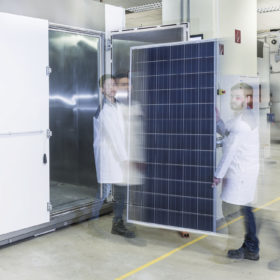
Scratching the surface of LeTID
The mechanisms behind light-elevated temperature-induced degradation are still not fully understood, but it is known to cause significant performance losses for modules in the field. Scientists in China are investigating the causes of the phenomenon, and are currently focused on the surface of the materials and the interfaces between the silicon and passivation layers.

A step forward for single-crystal perovskites
Scientists in the United States have developed a lithography-based process for the fabrication of single-crystal perovskites. Thin films made using this process have been integrated into a range of devices, including solar cells, and have demonstrated better stability performance than their more commonly researched polycrystalline counterparts.

Perovskite structure also benefits batteries
Scientists at Germany’s Karlsruher Institute of Technology are leading an investigation into a new lithium-ion battery anode. The innovation has a perovskite crystalline structure and, according to the researchers, could provide strong all-round performance from simpler, cheaper production methods than those used for other anode materials.

Microsoft trials hydrogen-powered data centers
The software giant has begun testing hydrogen fuel cells as a back-up power source at one of its U.S. data centers. A 250 kW pilot system successfully powered part of the facility for 48 hours and the company is now eyeing 3 MW systems to replace back-up diesel generators.
