
New surface texturing boosts TOPCon solar cell efficiency by 1%
Chinese researchers have demonstrated a single-step submicron structured surface texturing process that improved the absolute efficiency of a TOPCon solar cell by 1% through broadband anti-reflection and lower electrical resistance. The cell-level performance was validated in laboratory and outdoor tests.

The impact of microclimate effects on floating PV plants
French researchers have developed a high-resolution computational framework to model microclimate effects of large floating solar PV systems, enabling accurate predictions of heat transfer, ambient temperatures, and water evaporation based on panel configuration and wind conditions. The model can inform thermal performance, environmental impacts, and optimize designs for utility-scale floating PV, as well as ground-mounted and agrivoltaic installations.

Power Roll testing new metrology for perovskite solar
The UK-based perovskite solar PV specialist has announced a new metrology research project with Swansea University and a new development agreement with Renolit, a German plastic films, sheets and polymer solutions company.

Korean scientists boost performance of tin monosulfide cells with new post-treatment
Researchers in South Korea improved the performance of tin monosulfide (SnS) solar cells with a potassium fluoride-assisted post-treatment and a vapor transport deposition process. The treated solar cells had a power conversion efficiency of 4.10% and reduced recombination sites, compared to 3.42% for untreated devices.

Flexible perovskite solar cells with tunable color, transparency
Researchers at Hebrew University of Jerusalem have demonstrated 9.2% efficient printable semi-transparent, flexible halide perovskite solar cells with tunable color and transparency.
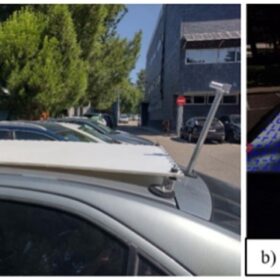
Test tracking algorithms for vehicle-integrated photovoltaics
Researchers in Spain developed a new model incorporating dynamic shading conditions in Madrid to evaluate the yield and test control algorithms for vehicle-integrated PV (VIPV) systems.
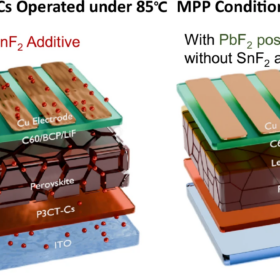
Scientists build tin lead perovskite solar cell with 24.07% efficiency
A Chinese-Swedish research team has boosted the performance of tin-lead perovskite solar cells by modifying additives and post-treatment processes. The device also demonstrated improved stability, retaining 60% of its initial efficiency after 550 hours at 85 °C under maximum power point conditions.

Scientists achieve 32.6% efficiency in perovskite-silicon tandem solar cell via interface engineering
Researchers from KAUST, TU Delft, and LMU Munich have improved the performance of monolithic perovskite-silicon tandem solar cells by modifying the physical structure at the front of the bottom heterojunction solar cell.

Scientists achieve 25.4% efficiency in perovskite solar cells with enhanced stability using multivalent ligands
Researchers have used multivalent amidinium ligands to boost perovskite solar cell efficiency to 25.4%, achieving over 95% stability after 1,100 hours at 85 C. The proposed approach enables controlled low-dimensional passivation layers, offering a practical route for durable, large-area perovskite devices.

New software identifies optimal rooftops for C&I solar
United Arab Emirates software specialist Planno has launched software to automate prospecting for roof surface sites with potential for solar PV generation.
