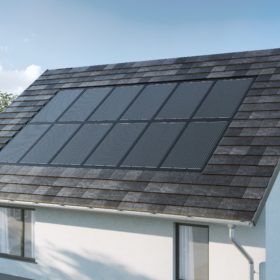
UK removes ‘key barrier’ to installation of household battery storage
The government regulator for gas and electricity markets in the United Kingdom has released updated guidance clearing up the confusion surrounding the installation of storage at households exporting solar to the grid. More still needs to be done though, argues the Solar Trade Association.
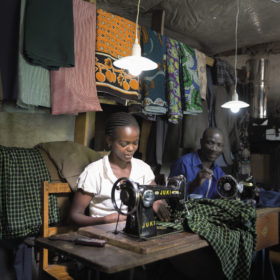
Kenya’s 2022 universal electrification goal bets on off-grid solar
The World Bank and the Kenyan Government have announced a new strategy for attaining universal energy access for Kenyans by 2022. The plan underlines the importance of off-grid solar installations in reaching that goal. The investment opportunities for the coming five years are around US$14 billion.
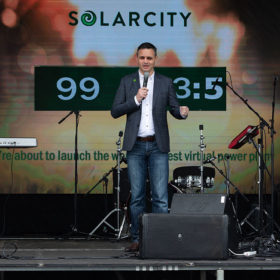
Kiwis launch 18 MWh VPP, green investment scheme
New Zealand will connect 3,000 home battery systems to the national grid to provide demand response services. The government has also set up a US$69 million finance company to accelerate investment in distributed energy generation and electric vehicles as part of its 2050 carbon neutral goals.

Sonnen to provide primary balancing power to German grid from networked home storage
After months of preliminary work, the time has come: With its PV+home storage network, sonnen GmbH has received prequalification from TenneT to participate in Germany’s primary control energy market. While it is currently allowed to deliver 1 MW, the goal is to supply 100 MW.

EU confirms increased renewables ambition as an early Christmas present
Political bloc wants to source at least 32% of energy from renewable generation by 2030 and signed off on the more ambitious target as a statement of intent during the first week of the Katowice climate change conference.
A vision of carbon neutral power around the globe by 2050
A scenario in which no additional oil, coal or nuclear capacity is built and renewables grow at a pace of 3-4%, would see solar comprise 69% of the global electricity system by 2050. According to an EU thinktank, such an effort would boost European manufacturing, creating jobs and prosperity.
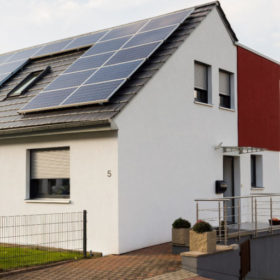
Germany added 182 MW of new PV capacity in October
The vast majority of the newly reported capacity was small and medium-sized PV rooftops. For ground-mounts, as in September, there was little volume. By the end of October, the government’s annual target of 2.5 GW of new capacity was almost reached. Solar FITs will fall another 1% in December.
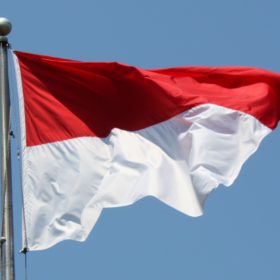
Indonesia introduces net metering
With a new decree, the Indonesian Ministry of Energy and Mineral Resources has enabled the owners of residential, commercial and industrial rooftop PV systems to sell excess power to the grid. The government hopes the new provisions will result in around 1 GW of deployed PV capacity over the next three years. Doubts, however, have been raised about the attractiveness of the scheme.

“There are four or five key issues in project quality control, most of them before installing the first module”
PI Berlin plans to open a headquarters in Spain next year. pv magazine has spoken with Senior Consultant Asier Ukar about market expectations, the most recurrent quality failures in Spain, risks, certification and protectionism. “After 10 years, we return to Spain with much enthusiasm,” he told us.
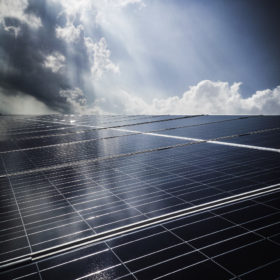
Philippine regulator opposes net metering expansion
The Philippines’ Energy Regulatory Commission (ERC) has said the removal of the 100 kW cap for solar installations under net metering would be difficult for the nation’s grid to accomodate. Meanwhile, a proposal to raise the threshhold is being discussed in the country’s Senate.
