
India installs 1,861 MW rooftop PV, Maharashtra leads the market
India has installed total 1,861 MW rooftop PV as of September 2017 as the state of Maharashtra overtakes Tamil Nadu to become largest for rooftop solar, as per latest report by Bridge to India. Analysts have revised India’s rooftop projection to 10.8 GW by 2021.

Argentina grants final approval for new distributed generation law
Under the new rules, which are expected to come into force in the first quarter of 2018, owners of residential and commercial PV systems will be allowed to sell excess power to the grid under a net metering mechanism.
Lithuania’s new energy strategy bets on wind and prosumers
Although the country’s new national energy independence strategy says wind will represent 65% of its total renewable energy share by 2050, the number of households that self-generate their power (predominantly from solar) is expected to increase from 34,000 in 2020, to 500,000 in 2030.
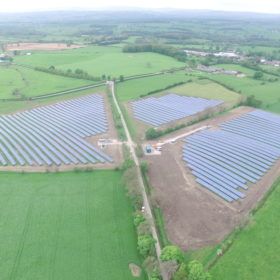
Wales urges UK Government to renew solar, wind support
The Welsh Government, together with a number of local organizations, is calling for the U.K. Government to renew its support for solar and onshore wind development. In addition to reducing costs, it says these industries will help it survive a post-Brexit world.
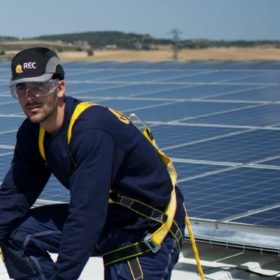
European PV market expected to grow by 35% in 2018 – GTM Research
European countries such as France, Germany, the Netherlands and Spain are all forecast to be gigawatt-scale markets in 2018. Globally, around 606 GW of new PV capacity is forecast to be installed between 2017 and 2022.

India releases roadmap for RE rollout, announces 20 GW manufacturing auction
The Indian government has unveiled a roadmap for achieving its 2022 renewable energy goals. It has also announced plans for a 20 GW auction to boost domestic RE manufacturing.
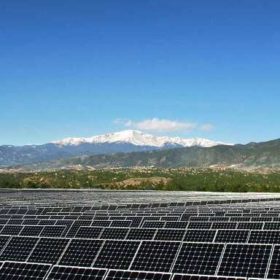
France deployed 484 MW of PV in first nine months of 2017
As of the end of September, the country’s cumulative installed PV capacity reached 7.68 GW.
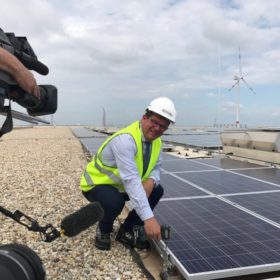
Belgian Court of Appeal rejects lawsuit against Flanders’ grid-fee for residential PV
The so-called “prosumer tax” was introduced in July 2015 and applies to residential PV systems not exceeding 10 kW installed under net metering.
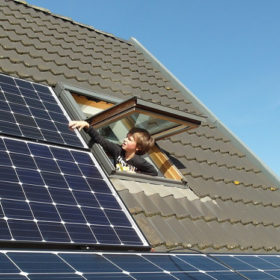
Rooftop PV key driver of 2017 installation forecast hike in China
With at least 22 GW of combined solar PV capacity, rooftop solar PV uptake and solar projects built before they have secured quota stand out as the key drivers behind increased 2017 installation forecasts in China.
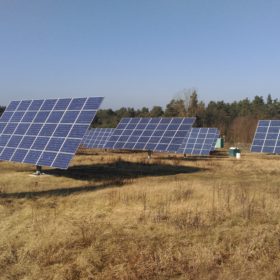
India solar installs hit 2.2GW in Q3
Record growth continues as India installed 2,247 MW of solar projects in Q3 2017, up 15% from Q2 2017. The total installation at the end of 2017 is expected to range from 9.5 GW to 10 GW. The 7 GW solar installation in first nine months covered more than one-third of total new power capacity addition in 2017.
