Solibro restructuring plan will depend on shareholders
The District Court of Dessau-Roßlau yesterday confirmed self-administered insolvency proceedings have been conducted at the German thin-film CIGS module manufacturer and a provisional administrator has been appointed.

Longi brings forward manufacturing capacity plans by a year
Having stated an intent to hit 65 GW of annual mono wafer production capacity by the end of 2021, the Chinese solar manufacturing giant has now said that landmark will be achieved next year.
Space age solar solution moves toward production
A consortium of European research institutes has received €10.6 million in EU funding to establish pilot production of a high efficiency module concept developed by Swiss startup Insolight. The module combines high efficiency multijunction cells with a solar concentrator lens and has previously demonstrated 29% efficiency.
German scientists team up for perovskite tandem cells

Two of Germany’s leading research institutes and a CIGS module maker have announced plans to work on the development of perovskite-CIGS tandem cells with a target of producing thin film modules with better than 30% efficiency.
‘Explosive growth’ ahead for Chinese PV predicts Solargiga
The Chinese manufacturer is holding out hope a boom that is expected to start imminently will help it turnaround losses that forced it to issue a profit warning last week. Getting its new production line in Qujing up to speed will help, provided the demand materializes.
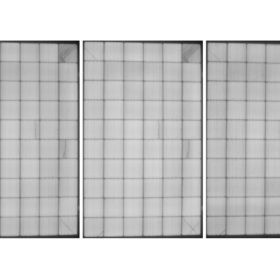
Tuesday webinar: New test for microcracks will ‘push the industry to exceed benchmarks’
A new test design from the University of Central Florida has challenged modules with different cell technologies. The results show advantages for the heterojunction modules tested. Here we discuss the new method with its designer.
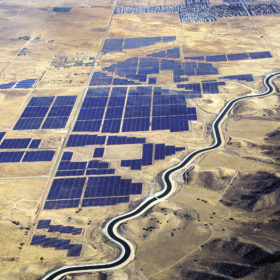
JinkoSolar unveils another impressive set of quarterly figures
The Shanghai-based solar manufacturer has maintained gross margin in a depressed domestic market by shipping ever more modules around the world and is pressing ahead with dramatic production plans on the eve of a looming solar boom.
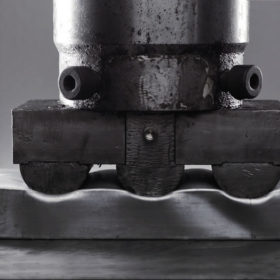
Ganfeng Lithium prepares solid-state battery test line
The Chinese company is ramping up R&D efforts to try and fast-track commercialization of the more productive – and more expensive – battery tech. The news was announced as part of an uninspiring first-half update thanks to falling lithium salt prices.
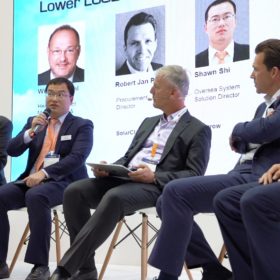
Longi: ‘Our larger wafer must be industry standard’
The Chinese giant has argued its 166mm M6 product should be the new iteration used worldwide, even though larger products have been launched by rivals. Longi says the fact existing cell and module production lines can be adapted for the M6 means rising demand for solar worldwide can be swiftly satisfied.

Solargiga finally gets 600 MW ingot and wafer operation up and running
The solar manufacturer today moved to reassure investors ahead of what promises to be another rocky set of first-half figures in two days’ time. The Hong Kong company says it wants to add another 3.6 GW of mono ingot and wafer capacity by early 2021.
