
German scientists to develop energy-storing solar cells
The planned cell is to be based on the so-called norbornadiene-quadricyclane storage system.
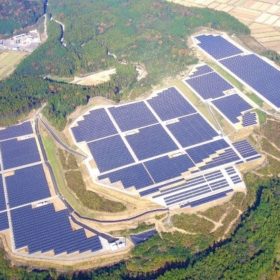
Japanese government must be more unified in pursuit of PV goals — report
The Japanese government is steadily working toward the release of the country’s fifth strategic energy plan, but it needs to work with the private sector more effectively to promote the deployment of solar over the coming decades, according to a new report.
US could slap additional 25% tariffs on Chinese cells, modules
The new round of IT-related tariffs could make it more expensive for any manufacturers planning to import cells from China for module production in the United States.
2018 global PV market to see negative growth following China backtrack
Global solar PV demand this year will be less than in 2017, on the back of China’s latest policy decision, says TrendForce. Overall, it sees new installs dropping 40% in China to 31.6 GW. The protectionist measures taken by the U.S. will also be weakened by the resulting falling module prices.
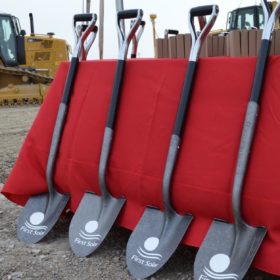
First Solar breaks ground on 1.2 GW factory in the US
The plant is the second-largest planned in the Western Hemisphere, and will triple the thin film module maker’s manufacturing capacity in the United States.
SOLAR-ERA.NET launches €22 million call to co-fund development of innovative solar technologies
Through the joint call, the European organization is seeking to provide financial backing for, among other PV and CSP technologies, high-performance crystalline silicon and thin film technologies which can increase module efficiency and decrease turn-key system costs.
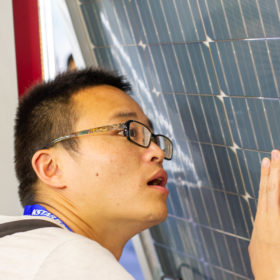
IHS Markit lowers 2018 outlook for world PV market to 105 GW
The market research company expects the Chinese market will decline by 15 GW this. Part of this slow-down, however, will be off-set by lower module prices and accelerated demand across markets with pent-up demand. Furthermore, it forecasts another wave of oversupply, low profitability and consolidation in the industry.
Chinese government stands firm in face of PV industry lobbying
Representations by big beasts of global PV win only a partial concession from the authorities in Beijing, with officials agreeing to honor FIT payments for any ground mount projects connected during the next three weeks.

Dutch module maker Exasun secures financing to expand capacity
The glass-glass PV module manufacturer will install a new production line at its facility in The Hague thanks to new funds provided by the government of the region of South Holland, and Dutch banking giants ING and ABN Amro.
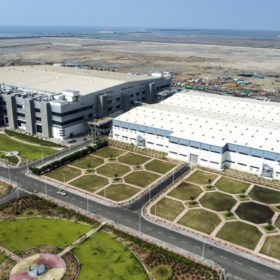
SECI launches tender for manufacturing capacity
The government’s Solar Energy Commission of India (SECI) has tendered 5 GW of solar manufacturing capacity to be set up across the country. The capacity will be linked to grid-connected PV projects with the plants developed on a build-own-operate basis.
