Fraunhofer debuts world record 25.1% efficient TOPCon solar cell
The Fraunhofer Institute for Solar Energy Systems ISE has achieved an efficiency of 25.1% on a both sides-contacted silicon solar cell. In addition to increasing efficiencies, the TOPCon technology is said to simplify manufacturing processes.
GTM Research: BoS cost reductions drive falling PV system prices
GTM Research’s latest report estimates that global PV system prices will fall an average of 40% by 2020, driven by balance of systems cost reductions.
3 GW of potential solar capacity on San Francisco roofs
Solar mapping provider Mapdwell has expanded to San Francisco, estimating that the city can host up to 3 GW of rooftop PV. This is a higher capacity per square mile than other cities.
Applied Materials eliminates wafer sawing and solar implant lines
Applied announced it would cut two of its solar product lines in its latest quarterly results, which caused a further bleeding of red ink in its Energy and Environmental Solutions business unit.
REC Group becomes third-largest PV supplier to US residential market
REC Group has risen rapidly in the U.S. residential sector, growing its market share five-fold in one year. It expects to grow this share further in 2015. The company has benefited from both technology innovation and political factors.
Jordan’s net metering expands into rural areas
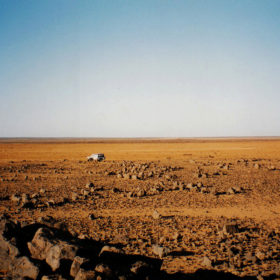
Jordan has designed an effective net metering scheme that is now about to expand into rural areas. Net metering installations are projected to double at the end of 2015.
Expert analysis: The solar storage story
Led by the charge of Teslas headline-hogging Powerwall announcement, the selection of storage technologies unveiled at this year’s Intersolar Europe was refreshingly innovative, says IHSs Sam Wilkinson.
BYD: EVA-free solar modules, 3 new energy storage batteries
At this year’s Intersolar Europe, BYD introduced a solar PV module without EVA, which promises an extended service life and improved efficiencies. Production is expected to reach up to 500 MW in 2016. It also unveiled a new battery and two energy storage systems.
PV plans abound, but Jordan can’t rest on its laurels
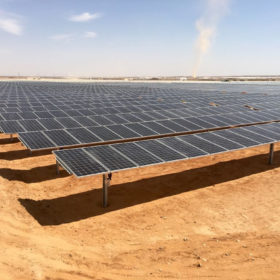
News of solar PV plans in Jordan is coming in fast and thick on the back of announcements last week that projects totaling 200 MW had been tendered at record low prices. The country appears to be gearing up for its day in the sun, but it can’t afford to rest on its laurels, with the fossil fuel industries still lobbying heavily.
Jordan’s second PV tender leads to record low tariffs
Jordan’s Ministry of Energy and Mineral Resources has chosen the winners of its second tender round. Overall, four 50 MW PV plants have been selected at record low tariffs, serving to highlight increased efficiencies, falling equipment costs and grid parity advances in the PV industry.
