Renewables, an antidote against volatile electricity prices for the EU
The European Commission says renewables are playing a central role in lowering spot prices and stopping rises in network charges and fees. In the EU energy market, however, coal and gas still dominate, ensuring power prices are unpredictable.
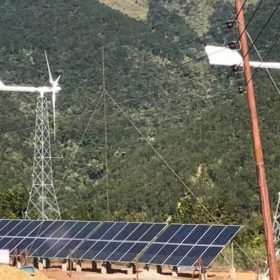
Nepal wants more hybrid wind-solar and needs information on prices
Through three tenders, Nepal’s Alternative Energy Promotion Center is increasing efforts to bring power to rural communities, and to increase the share of renewables in a nation still dominated by hydropower.

Ethiopia launches a tender for 800 MW of solar across four states
The nation’s Ministry of Finance is tendering six large-scale projects in Afar, Somali, Oromia and Tigray. The plants will be developed under a public-private partnership framework and their construction is expected to raise around $795 million.

Bangladesh prepares plans for two floating solar plants
Backing from the Asian Development Bank will help a 50 MW project get off the ground – and onto the water – in Chittagong, and a developer has been lined up to install solar on a stretch of the Padma river.
Sonnen receives €25 milllion financing from the European Investment Bank
The EIB said supporting the battery supplier will help Europe realize its clean energy targets. The funds are earmarked for the company’s European R&D, as well as stemming ‘operational burdens’ from its growth rate. Sonnen recently made headlines by opening a factory in Australia to supply its virtual power plant in Adelaide.
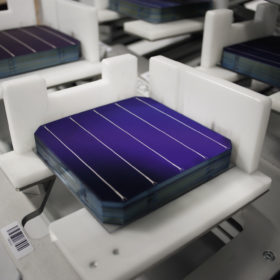
Energytrend: Stockpiles down, utilization and prices recovering
The Taiwanese market research company has published its latest price trend data for PV modules, cells, wafers and silicon. Across the value chain, rising demand is causing stockpiles to dwindle and utilization rates to rise. Prices are rising in China as well as for high-efficiency products. Module prices have stabilized.
Dutch pension fund and Shell eye acquisition of energy company Eneco
PGGM and Shell have expressed interest in acquiring sustainable energy company Eneco, a municipality owned business which wants to go private. The energy provider has installed 100 MW of PV and operates in northwest Europe.
Kaco sells central inverter business to Korean developer OCI Power
German concern Kaco has sold its central inverter business. The German manufacturer hopes to focus on its string inverter and energy storage branches while the South Korean buyer hopes the newly acquired knowhow can improve the energy efficiency of its large-scale PV parks.
Enel sells Brazilian PV plants totaling 450 MW to China’s CGNEI
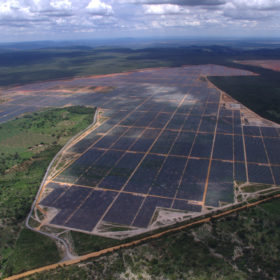
Two facilities were sold along with a 90 MW wind power plant generating the vendor around €700 million. Both solar projects were awarded 20-year PPAs in the most successful auction held by the Brazilian government, in August 2015.
Green power certificates and curtailment will be key to China’s grid parity solar ambition
Analysts have welcomed the measures ushered in by Beijing to encourage the development of PV projects without central subsidies, but with the obstacles the policy aims to address having dogged Chinese solar for years, more detail is required.
