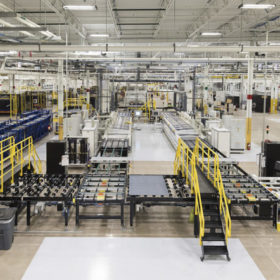
First Solar’s big format brings big bookings
The PV maker’s quarterly results show not only the ramping of its Series 6 production at a third location, but also bookings that continuing to climb, with 11.3 GW of modules now under contract.
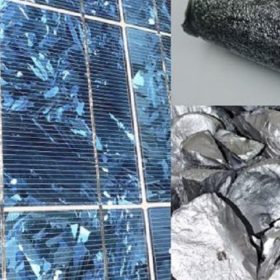
Ingot, wafer prices dropping; market momentum needed
Polysilicon and wafer suppliers are still struggling with oversupply and low demand. Tier 1 raw material manufacturers have signed their October orders, but further down the food chain, companies are still waiting for bites. Overall, prices on the cell and module level are in slight decline, although prices for ultra-high efficiency modules have climbed by a small margin, on the back of increased demand.

Poor polysilicon performance affects Wacker’s Q3
Despite its chemical business performing strongly, Wacker Chemie AG’s Q3 2018 financials took a tumble, with polysilicon sales and EBITDA sharply declining. The blame has been laid on China’s PV policy change in May.

Solar and storage show steady growth as Tesla finally turns a profit
Tesla energy storage deployments grew 18% and storage deployments grew 11%, as the EV + battery + solar company achieves its a long-awaited quarterly profit on the success of its Model 3.

Asian market to see 355 GW of solar over five years, despite policy challenges
Despite political hurdles in key markets including China, India and Japan, Asia remains highly active. This year, 59 GW of solar is expected to be installed and due to further system price declines, a phase-out of subsidy schemes can be offset.
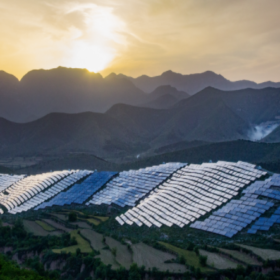
GCL sells off stake in 160 MW of Chinese PV projects
Poly manufacturer and developer raises another $44m to pay down its huge debt pile after selling an 80% stake in two solar projects in its homeland.
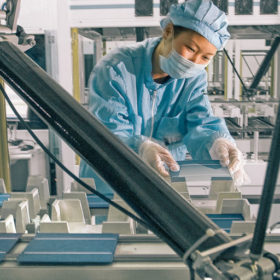
Yingli backs down in $9.5m unsettled notes case
The struggling Chinese manufacturer has withdrawn its appeal against a Chinese court decision it must repay medium term notes it failed to honor in 2015 and 2016. Yingli is struggling to stay afloat after a series of disastrous financial updates.
Subsidy windfall helps GCL Poly eat into debt mountain
The Chinese manufacturer – which is gambling on a big rebound in global appetite for the raw material for PV panels materializing soon – will devote all of its $143m solar subsidy income to paying off a daunting amount of borrowing.
The reasons India’s 10 GW solar tender will not attract big developers
Big players such as Acme, ReNew, Adani, Azure, Hero Future and Aditya Birla Solar are likely to stay away from procurement which requires 3 GW annual manufacturing commitment, says industry insider Gopal Lal Somani.
Fears UK autumn budget could see a coal renaissance
Analysts have released a report which examines multiple carbon pricing scenarios, and their effect on UK power bills, renewables and the carbon budget. The UK’s Carbon Price Support could be lowered in the autumn budget next week, putting the nation further off course on its carbon budget. A high CPS would foster renewables, without driving electricity bills up.
