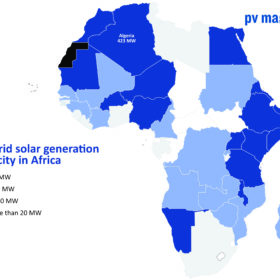
Botswana-Namibia green hydrogen project expands to 5GW
The raised ambition of an already huge renewables-powered hydrogen project in the Southern African nations vividly demonstrates the hydrogen and clean energy potential of a continent which accounted for just 0.5% of the world’s new solar capacity last year, according to trade body AFSIA’s annual report.
Industry heavyweights look to solid-state battery cells, resources, and recycling
Mercedes-Benz has teamed up with ProLogium to integrate solid-state battery technology into a range of passenger vehicles; Panasonic and Toyota have launched an industrial-academic collaborative research program concerned with battery resources and recycling; and LG Energy Solution plans to spend $2.1 billion with General Motors to build another electric vehicle battery plant in the U.S.
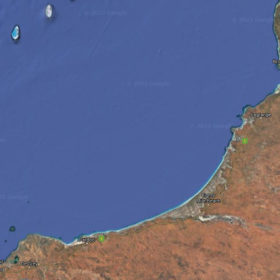
Singapore sovereign wealth fund backs Australian green hydrogen developer
The InterContinental Energy company behind two proposed green hydrogen megaprojects in Western Australia – the 26GW Asian Renewable Energy Hub and the 50GW Western Green Energy Hub – has received the backing of Singapore’s US$744 billion sovereign wealth fund GIC.

GCL wants note holders to back switch to gas-fired hydrogen
The Chinese solar developer, which has sold off four-fifths of its PV project capacity to state-owned entities, wants the permission of the holders of $420 million of 2024 senior notes to change the terms of their investment so it can buy Ethiopian natural gas from a connected business.
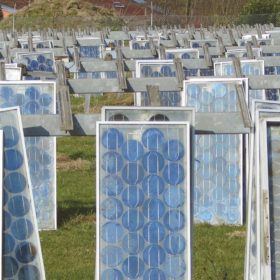
European Court of Justice: Solar manufacturers not liable for waste costs for panels shipped to EU before Aug. 2012
A preliminary ruling by the European Court of Justice states panel makers should not be responsible for electrical waste management costs in a seven-year period as the rules in place before the EU’s WEEE directive entered force, in 2012, permitted member states to place the obligation on panel users instead. The resulting change in law, in some states, cannot be applied retroactively, under EU legal rules.
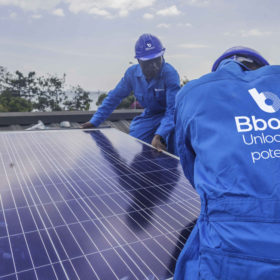
Bboxx secures funds for 90,000 solar home systems in Kenya
The off-grid solar supplier said the fact its latest finance package is denominated in local currency will help encourage African commercial banks to be more ready to back PV.
Africa’s winners and losers in the bid to go solar
While East Africa – and Kenya is particular – has made great strides in the provision of off-grid solar systems, Central Africa is a long way behind, according to a new report from IRENA and the African Development Bank. In terms of investment, the study’s authors wrote, much, much more will be required to achieve universal electricity access this decade.
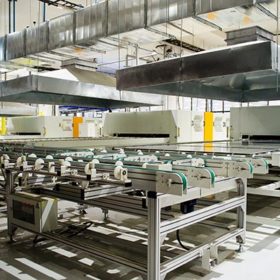
India’s solar module manufacturing capacity on track to soar 400% in four years
Ratings agency Crisil estimates India will have 38-43GW of annual solar module manufacturing capacity by the end of March 2025. Production capacity will be driven by strong domestic demand, favorable government policy, raised module conversion efficiency, and price competitiveness, according to the ratings agency.

Shanghai Electric sounds death knell for CIGS manufacturing project backed by $197m of public money
With five public entities having committed RMB1.25 billion into a project to produce copper, indium, gallium, selenide solar modules five years ago, the joint venture has been abandoned at an estimated impairment cost of RMB1.42 billion.
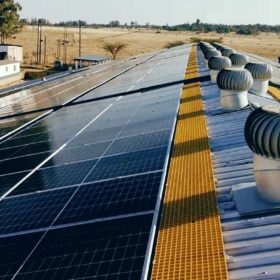
Nhimbe Fresh’s solar-powered blueberries
Cape Town-based solar crowdfunding platform The Sun Exchange in April announced completion of its largest funding call, for US$1.4 million to finance what it described as a 510kW solar-plus-storage facility for Zimbawean food company Nhimbe Fresh. With the first part of a planned three-phase “going solar” transformation of the business complete, pv magazine spoke to The Sun Exchange founder and CEO Abraham Cambridge, and to Nhimbe Fresh chairman Edwin Masimba Moyo.
