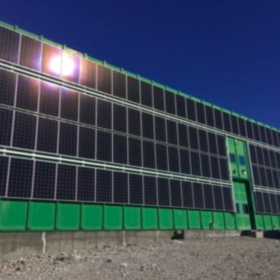
Australia’s first solar farm in Antarctica opens at Casey research station
A 30 kW vertical array has been powered up at Australia’s Casey research station in Antarctica. The project is one the largest solar installations on the ice-covered continent.

Bangladesh to complete 7.4 MW of solar capacity in April
A 7.4 MW solar plant will start generating electricity next month in Rangamati, in Bangladesh’s Chittagong Division.

Debt-laden Panda Green sells 82.5 MW UK portfolio
The heavily-indebted solar developer has sold off six solar projects to a U.K.-Irish renewables investment fund for £34 million, ensuring it will be able to settle the most immediate of its reported $3.1 billion commitments.
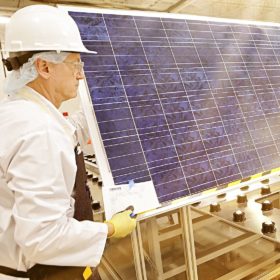
Canadian Solar CEO: Storage key to sustaining long-term, stable Australian PV market
Canadian Solar has been acquiring utility-scale projects and signing module supply and EPC deals at a rapid pace in recent months. Shawn Qu, Canadian Solar’s founder and CEO, would prefer the market to continue at a stable level, rather than boom and bust. And he argues that the dual role of module maker and developer delivers valuable insights into pricing and technology trends — giving the company an advantage over rivals.
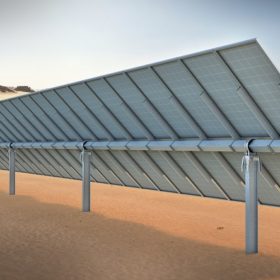
Rise of bifacial lifts profits for the world’s tracker companies
Things are hotting up in the tracker world as the desire to squeeze down the price per Watt of solar power intensifies. And the rise of the trackers is attracting some well-known businesses to buy their way into the field.

ACWA triumphs again in Middle Eastern tendering exercise
With no details reported on the final electricity price agreed for a 500 MW solar project to be built in Oman, speculation will center on whether the victorious Saudi power company and its Kuwaiti partners have again trumped lower offers from overseas rivals.

Shareholders vote through Panda Green debt repayment plan
Stockholders agree to hefty dilution of their shareholding in order to raise funds to pay looming HK$1 billion debt, with state-owned entities including a designated buyout fund due to control up to a third of the new business.

India extends bid deadline for latest attempt to attract solar manufacturers
The deadline for the Solar Energy Corporation of India’s latest attempt to incentivize solar manufacturing, by offering generation capacity, has come and gone. The government body’s attempts to kick-start domestic production have thus far made little headway.

Japan could install 150 GW by 2030 — report
Japan’s cumulative installed PV capacity could reach 150 GW by 2030, from roughly 55.5 GW by the end of 2018, according to a new report by Tokyo based research firm RTS Corp.

Lithium and cobalt prices down 30%; EV’s watershed moment looming?
Against the backdrop of soaring demand, commodity prices for lithium and cobalt have come down 30% since the beginning of the year. This could have a profound effect on the EV industry, bringing price parity in comparison with conventional vehicles much earlier than previously thought.
