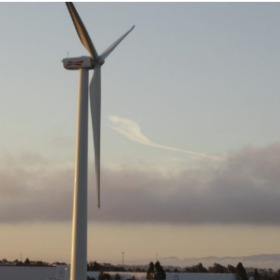
Anheuser-Busch commits to 100% renewable energy
With $46 billion in annual revenue, the beer giant may be the largest company to date to take a 100% renewable energy pledge.
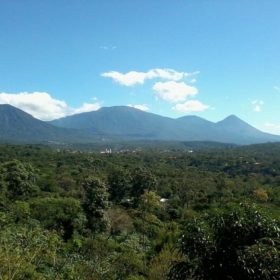
El Salvador signs contracts for four PV projects at $51.48/MWh
Four PV projects totaling 119.9 MW were awarded in the second auction for renewable energy projects held in the Central American nation in January.
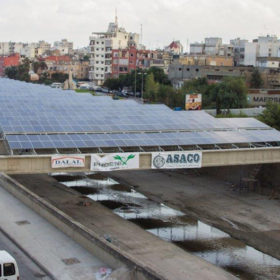
Lebanon approves plan to install 180 MW of solar
Lebanon has approved a plan to promote the development of solar and renewable energy in the country. The plan aims at deploying 180 MW of PV capacity by 2020. The first auction for utility-scale solar projects was launched in mid-February.
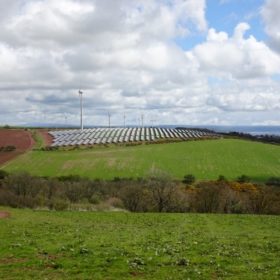
Vattenfall to invest $226 million in solar and storage over next two years
The Swedish power utility announced a plan to invest heavily in renewable energies over the next two years. The company said investments in solar and storage will reach 2 billion SEK ($226.3 million).
Sweden allocates $25.6 million for solar rebates in 2017
The Swedish Energy Agency Energimyndigheten has allocated 225 million SEK ($25.6 million) for the support of solar energy in 2017. The funds will be used for the country’s solar rebate program.
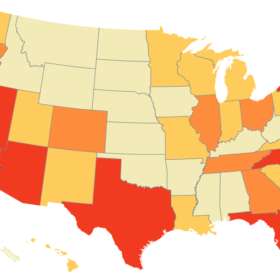
U.S. solar produced $154 billion in economic activity for 2016
A new interactive map from The Solar Foundation allows visitors to see the impact of the solar industry at state, metropolitan area, county, and congressional district level for the United States in 2016 .
Kenyans embrace d.light’s D30 Pay-Go solution
Since launching in October 2016, off-grid solar solution supplier d.light has sold over 120,000 units of its D30 Pay-Go home system. Most of the sales were made in East Africa, with the Kenyan market accounting for the majority of sales.
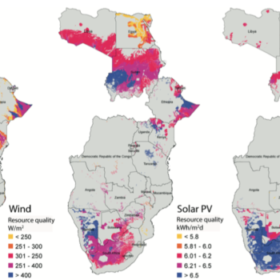
Strategic siting can boost solar development in Africa, says Berkeley Lab
A report from U.S. Department of Energy’s Lawrence Berkeley National Laboratory (Berkeley Lab) assesses the wind and solar potential of Africa. According to the study, the two technologies can play a major role in the energy economy of the continent, especially if strategic siting and international interconnections are implemented.
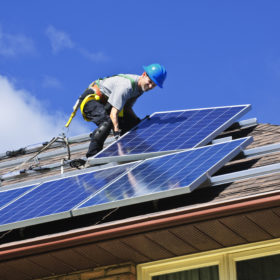
French energy regulator publishes tender for commercial PV projects for self-consumption
The French Energy Regulatory Authority has published the tender for the installation of renewable energy and PV projects for self-consumption ranging in size from 100 kW to 500 kW. Through the tender the French government aims to allocate 450 MW of renewable energy capacity over the next three years.
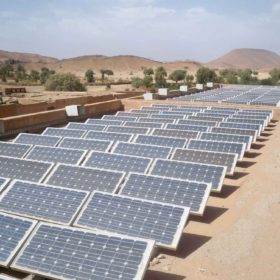
Algerian renewable energy sector raises doubts on 4 GW solar tender
Parts of Algeria’s renewable energy sector is questioning the 4 GW solar tender recently announced by the Algerian government. Provisions on domestic content requirements and the large share that state-owned entities will have on the ambitious solar plan are seen as the major obstacles for its implementation.
